
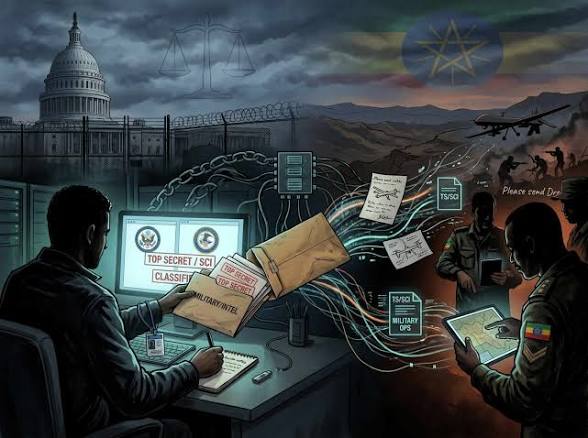
US Government IT Administrator Pleads Guilty to Spying for Ethiopian Government
A former US government information technology administrator who had access to highly classified intelligence has admitted to sharing sensitive national security information with Ethiopian government officials. Abraham Teklu Lemma, a naturalized American citizen of Ethiopian origin, pleaded guilty in a Washington federal court, potentially facing more than 20 years behind bars over the espionage-related offence.
Highlights
- Abraham Teklu Lemma pleaded guilty to disclosing national defence information to Ethiopia.
- He previously worked as an IT subcontractor for the US State Department and Department of Justice.
- Lemma allegedly transferred dozens of classified documents and photographs to Ethiopian officials.
- Prosecutors say some of the information included material classified as Top Secret.
- He faces a potential prison sentence of 120 to 262 months, with sentencing scheduled for April 14.
Main Story
Former US Government Worker Admits Sharing Classified Information
A former American government IT administrator has pleaded guilty to conspiring to provide classified national security information to the Ethiopian government in a case that has raised serious concerns about the protection of sensitive intelligence.
Abraham Teklu Lemma, a naturalized US citizen of Ethiopian descent, entered his guilty plea on Tuesday before a federal judge in Washington.
Lemma previously worked as an information technology subcontractor for the US Department of State and the Department of Justice, positions that gave him access to sensitive government systems.
He was arrested in August 2023 and initially denied the allegations before changing his plea.
According to US authorities, the former administrator used his privileged access to obtain and transfer classified national defence information to Ethiopian government officials.
How the Information Was Allegedly Transferred
US prosecutors allege that Lemma used his position and administrator privileges to extract sensitive material from a secure government facility and secretly transmit it to Ethiopian officials.
The documents reportedly included dozens of classified files, handwritten notes, photographs and other materials collected between 2021 and his arrest in 2023.
According to US officials, Lemma hoped the information would help Ethiopian authorities identify and target armed groups involved in the country’s internal conflict.
John Eisenberg, the US Assistant Attorney General for National Security, said Lemma abused the trust placed in him through his government role to access and share information that was never meant to leave secure facilities.
Authorities further allege that he encouraged Ethiopian officials to take decisive action against paramilitary groups fighting the government.
Alleged Espionage Linked to Ethiopia’s Internal Conflict
The case is particularly significant because the period during which Lemma allegedly shared the information coincided with Ethiopia’s devastating conflict involving federal government forces and the Tigray People’s Liberation Front (TPLF).
The conflict erupted in November 2020, creating a major humanitarian and security crisis in northern Ethiopia.
Although a peace agreement was reached in November 2022, tensions between the opposing sides continued, with renewed confrontations reported in subsequent periods.
Prosecutors allege that Lemma wanted the Ethiopian leadership to use the classified information to strengthen its efforts against armed groups challenging the federal government.
The TPLF previously played a major role in Ethiopian politics after helping overthrow the military Derg regime in 1991. It subsequently dominated the country’s political landscape for decades before losing influence following political changes in 2018.
Former Administrator Faces Lengthy Prison Sentence
Following his guilty plea, Lemma is scheduled to appear for sentencing on April 14.
He faces between 120 and 262 months in prison, equivalent to approximately 10 to nearly 22 years, depending on the court’s final determination.
The case highlights the security challenges facing government institutions, particularly when employees and contractors have privileged access to sensitive information.
It also raises questions about the potential consequences when classified intelligence is allegedly transferred to foreign governments during periods of armed conflict.
The case serves as a reminder that access to classified information comes with enormous responsibility, and that a breach of national security can have consequences extending far beyond government offices.

