
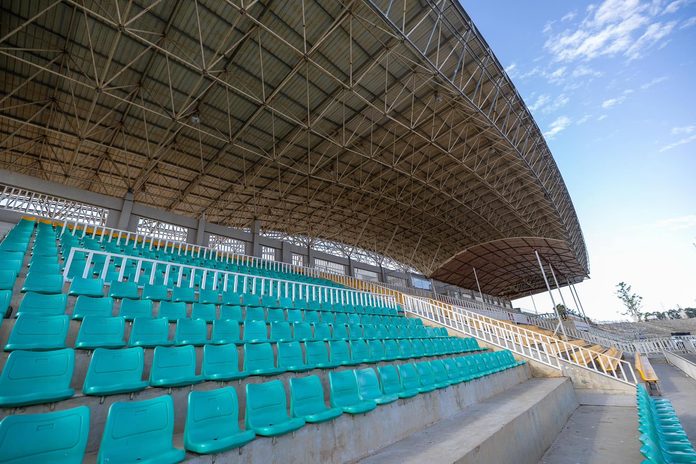
The transformation of Bukhungu Stadium is giving Western Kenya renewed hope for the growth of football, athletics and the wider sports industry, according to local coaches Gilbert Coach and Frank Omondi.
Gilbert Coach, a football coach in the Western region, recalls a time when Mumias had some of the best football playing surfaces in the region. However, as the facilities deteriorated, football also suffered.
With the decline of proper sporting grounds, many players were forced to use open and unenclosed fields. Gilbert says this created safety concerns for fans while also making it harder for young and talented players to attract the attention of scouts and people searching for emerging talent.
He believes improved sporting facilities can play an important role in changing that situation by creating an environment where players can showcase their abilities in organized and competitive settings.
For Frank Omondi, an athletics coach in Western Kenya and a Kenya Prisons officer, the transformation of Bukhungu Stadium is evidence of how far the facility has come.
Frank recalls the stadium in 2015, when the grounds were characterized by trees, potholes and limited infrastructure, making it difficult to consider it a modern sporting facility.
Today, he says, the situation is significantly different. The stadium now has infrastructure that supports athletics training, football and other sporting activities.
The improved facilities have also created a better environment for athletes. According to Frank, athletes can train from morning to evening, giving coaches more opportunities to identify, develop and nurture talent.
“The stadium has come from far,” Frank says, emphasizing the difference between the facility he knew in 2015 and what it has become today.
The investment in Bukhungu Stadium has also brought a sense of pride to Western Kenya. The facility is expected to serve more than just football, providing space for athletics and other sporting and community activities.
The benefits could extend beyond the field. With enclosed grounds, improved seating and better infrastructure, fans can attend matches in a more organized environment, while athletes have a suitable place to train and compete.
The stadium could also contribute to the local economy. Match days and sporting events can attract fans, teams and visitors, creating opportunities for traders, food vendors, transport operators and other businesses around the facility.
For coaches such as Gilbert and Frank, the development represents more than an upgraded stadium. It is an investment in young people and in the future of sport in the region.
Frank appreciates the national government and President William Ruto for the investment, saying the stadium belongs to the people of Western Kenya and should be used and enjoyed by the community.
As Bukhungu Stadium continues to develop, its impact could therefore be measured not only by the quality of its playing surface or facilities, but also by the talent it helps discover, the athletes it supports, the fans it brings together and the economic opportunities created around it.
For Western Kenya, the upgraded stadium offers a renewed platform on which the next generation of footballers, athletes and other sporting talent can build their future.

