
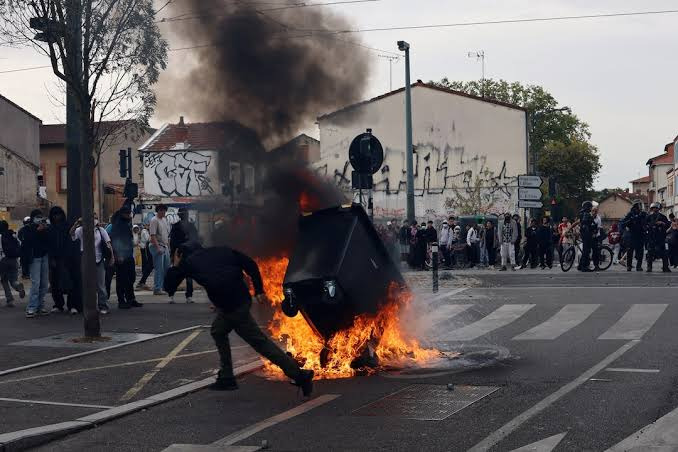
Up to 500 schools across France are expected to partially or completely suspend lessons on Monday as authorities respond to escalating student demonstrations that have seen clashes with police, vandalism and widespread disruption. The protests, driven by concerns over staffing, overcrowded classrooms and poor school facilities, have now spread beyond Paris to several other cities.
Highlights
- Between 400 and 500 high schools could partially or completely suspend lessons.
- At least 24 schools have reportedly been damaged or ransacked.
- More than 5,000 people have been arrested since the protests began.
- Authorities say 78 education staff members have been injured.
- Protest organisers are calling for demonstrations to continue on Tuesday.
Main Story
Hundreds of Schools Face Disruption
France is preparing for another difficult day in its education sector, with hundreds of high schools expected to suspend some or all lessons on Monday.
Education Minister Édouard Geffray said between 400 and 500 schools could be affected because authorities believe the required security conditions have not been met.
The disruption follows days of demonstrations involving students and clashes with riot police.
Authorities have also reported significant damage to education facilities, with 24 schools said to have been burned or vandalised since the protests began.
Students Raise Concerns Over Education Conditions
The demonstrations began last week in Paris before spreading to other major cities, including Montpellier, Nantes and Marseille.
Students have been protesting against several challenges within the education system, including shortages of teachers, crowded classrooms and deteriorating school buildings.
The scale of the unrest has grown rapidly. French Justice Minister Gérald Darmanin previously said 735 of the country’s roughly 3,700 schools had been affected in some way by the protests.
Government Blames Violent Elements
Geffray accused far-left activists of entering the student movement and escalating some demonstrations into extreme violence.
He argued that the situation has created safety concerns for both learners and education workers.
The minister said 78 members of education staff have been injured during the unrest, describing the figure as unprecedented.
Meanwhile, French authorities have reported a large number of arrests. Interior Minister Laurent Nuñez said 1,747 people were arrested on Friday alone.
According to AFP, more than 5,000 people have been arrested since the movement began, with minors making up approximately 85% of those detained.
Government Promises Measures
Prime Minister Sébastien Lecornu said the government is taking additional steps to respond to the concerns raised by students and education workers.
The measures include efforts to keep classes running, improve school infrastructure and reorganise school schedules.
The government also plans to make France’s university admissions system more transparent, addressing concerns surrounding access to higher education.
Lecornu further said authorities are speeding up work on legislation designed to make people responsible for vandalism financially accountable for the damage they cause.
Protests Expected to Continue
Despite the government’s response, organisers have called for demonstrations to continue on Tuesday.
They have accused authorities of failing to provide sufficiently concrete solutions to the problems that triggered the protests.
The government, meanwhile, says it wants schools to gradually return to normal while maintaining security for students and staff.
With tensions still high, France faces the challenge of balancing the right to protest with the need to keep schools safe and operational.
When students take to the streets over the state of their education, the protest may be disruptive—but it also forces a difficult question: how much should young people have to fight before their concerns are taken seriously?

