
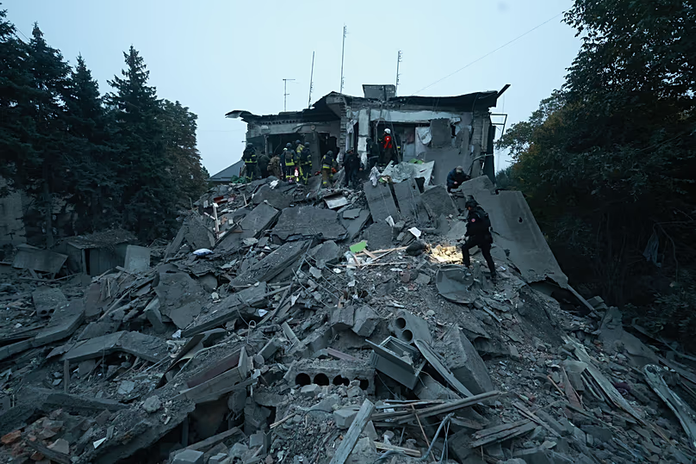
Ukrainian President Volodymyr Zelensky has criticised a reported US-Russia diesel agreement after fresh Russian strikes killed at least 15 people, including three children, in southeastern Ukraine. The attacks have intensified tensions over Washington’s decision to ease restrictions on Russian diesel exports, with Kyiv and European officials warning that sanctions relief could strengthen Moscow’s ability to sustain its war against Ukraine.
Highlights
- At least 15 people, including three children, were reported killed in Russian strikes on Zaporizhzhia.
- Zelensky condemned the US-Russia diesel agreement and called for the decision to be reversed.
- EU foreign policy chief Kaja Kallas warned that easing sanctions could support Russia’s war effort.
- Russian strikes also caused widespread power outages in Kyiv, according to energy provider DTEK.
- US, Ukrainian and European officials held fresh discussions aimed at finding a path towards ending the war.
Main Story
Zelensky Condemns Diesel Agreement After Deadly Russian Strikes
Ukrainian President Volodymyr Zelensky has accused Russia of responding to a reported agreement on diesel exports with renewed attacks on Ukrainian communities, following strikes that left at least 15 people dead.
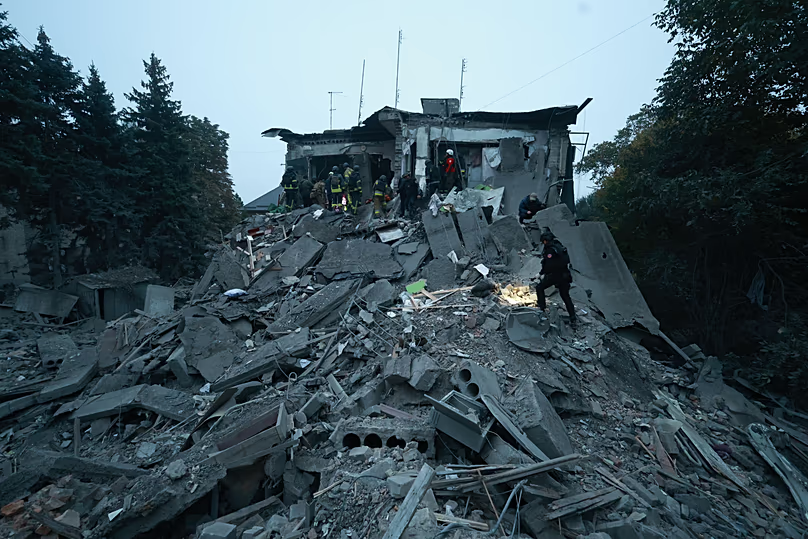
The attacks targeted residential areas in Zaporizhzhia, a city in southeastern Ukraine, where emergency crews worked to rescue people trapped beneath collapsed buildings.
In a statement shared on social media, Zelensky drew a direct connection between the strikes and the diesel agreement announced by US President Donald Trump following a telephone conversation with Russian President Vladimir Putin.
The Ukrainian leader argued that easing economic pressure on Moscow risked sending the wrong message while Russian forces continued attacking civilian areas.
The agreement has sparked concern in Kyiv and several European capitals, particularly as diplomatic efforts to end the war remain unresolved.
Zaporizhzhia Attack Leaves Families Grieving
Ukraine’s national police service said Russian forces targeted residential neighbourhoods in Zaporizhzhia using five guided aerial bombs.
The country’s state rescue service reported that at least 15 people had been killed, including three children.
Emergency responders were seen searching through rubble and pulling survivors from damaged buildings as the scale of the destruction became clearer.
One rescuer described finding several people beneath the debris, including a family. He also recounted the death of a young girl despite efforts to save those trapped in the wreckage.
Residents described having little time to seek shelter after air raid warnings sounded.
Iryna, a 69-year-old resident whose building was struck, told AFP that she managed to take cover in a toilet. She said two elderly neighbours had died in the attack.
The strikes have added to concerns about the growing civilian toll as Russia continues its bombardment of Ukrainian cities.
Kyiv Suffers Major Power Outages
The latest attacks were not confined to southeastern Ukraine.
In the capital, Kyiv, large-scale power outages were reported following Russian strikes, according to DTEK, the country’s largest private energy provider.
AFP journalists also reported hearing explosions across the city, while Kyiv’s mayor said a restaurant had been hit.
The disruption highlighted the continued vulnerability of Ukraine’s infrastructure as Russian attacks place additional pressure on electricity supplies and essential services.
Power interruptions can affect households, businesses and critical facilities, particularly when strikes damage energy infrastructure or complicate repair work.
Zelensky Calls for Diesel Deal to Be Reversed
The reported diesel agreement has become a fresh point of disagreement between Washington and Kyiv.
Trump announced the arrangement on Friday after speaking with Putin, saying the move would help bring down fuel prices in the United States.
The agreement would involve Russia releasing substantial quantities of diesel onto global markets in exchange for sanctions relief, according to the report.
Fuel prices in the United States have risen since late February, when American and Israeli military strikes against Iran contributed to heightened pressure on energy markets.
Trump has presented the agreement as a measure that could ease the cost of fuel for consumers.
Zelensky, however, argued that offering sanctions relief while Russian attacks continue risks weakening the pressure intended to push Moscow towards ending the war.
He called for the decision to be corrected, saying Russia would have little incentive to stop fighting if it believed it could continue its military campaign without facing greater economic consequences.
The disagreement reflects the wider challenge facing US-led diplomatic efforts: balancing immediate economic concerns against the goal of securing a lasting peace in Ukraine.
European Leaders Push Back Against Sanctions Relief
The proposed arrangement has also drawn criticism from European officials.
EU foreign policy chief Kaja Kallas said easing restrictions on Russian diesel exports could provide support to the Kremlin’s war effort.
She maintained that Europe would not abandon pressure on Moscow while the conflict continued.
Germany also indicated that it would press ahead with efforts to introduce additional European Union sanctions against Russia despite the reported US agreement.
The differing positions highlight tensions among Ukraine’s international partners over how best to influence Moscow.
While Washington has sought measures that could lower fuel prices and encourage diplomatic progress, Kyiv and some European governments remain concerned that easing restrictions could undermine efforts to limit Russia’s capacity to finance and sustain its military operations.
Fresh Diplomatic Talks Seek a Path to Peace
The latest developments came as US, Ukrainian and European officials met in Miami on Friday for renewed discussions aimed at ending the conflict.
US envoy Steve Witkoff described the talks as constructive, saying participants examined possible ways to reduce hostilities and advance efforts towards a lasting peace before winter.
The meeting included representatives from Ukraine, NATO, the European Commission and the E3 group of European countries: France, Germany and the United Kingdom.
Separately, the Kremlin said Putin had received Trump’s proposals for de-escalating the war during their telephone conversation.
According to the Kremlin, the Russian president received the proposals with understanding, although officials did not provide details of the measures discussed or clarify whether Moscow had agreed to any specific terms.
Despite the diplomatic activity, substantial obstacles remain. Russia launched its full-scale invasion of Ukraine in February 2022 and continues to occupy roughly one-fifth of Ukrainian territory.
The latest strikes have added urgency to negotiations, while raising questions about whether economic concessions can help secure peace or risk encouraging further military action.
For Ukraine, the immediate priority remains protecting civilians and responding to the destruction caused by continued attacks. For its international partners, the challenge is finding a diplomatic approach that can reduce hostilities without undermining pressure on Moscow.
As diplomatic negotiations continue, the central question remains whether economic compromises can bring an end to the fighting without placing more civilian lives at risk.

