
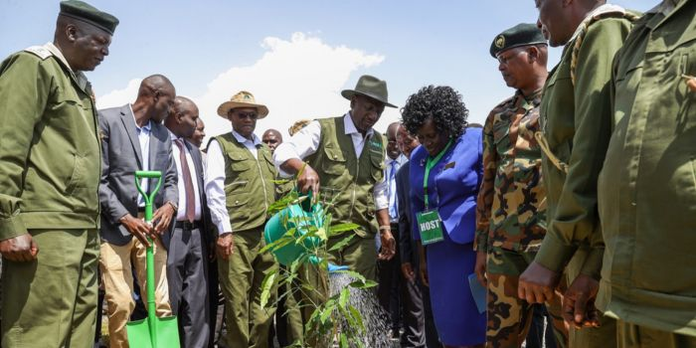
President William Ruto has outlined plans to accelerate Kenya’s environmental restoration while opening up new income opportunities for farmers through cocoa cultivation. Speaking in Kitale, the President announced the use of aircraft to distribute KEFRI-developed seedballs in hard-to-reach areas and launched cocoa as a scheduled cash crop, with seedlings set to be distributed to farmers in suitable regions.
Highlights
- President William Ruto announced plans to use aircraft for aerial seedball distribution.
- KEFRI-developed seedballs will help reach remote areas targeted for environmental restoration.
- Cocoa has been launched as a scheduled cash crop in Kitale.
- KALRO and KEPHIS are expected to collaborate on increasing cocoa seedling production.
- The government is promoting cocoa farming as a way to combine tree planting with income generation.
Main Story
Ruto Unveils Aerial Seeding Plan to Boost Afforestation
President William Ruto has announced a new approach to accelerating Kenya’s tree-growing campaign, with the government turning to aircraft and aerial seeding to reach areas that are difficult to access on foot.
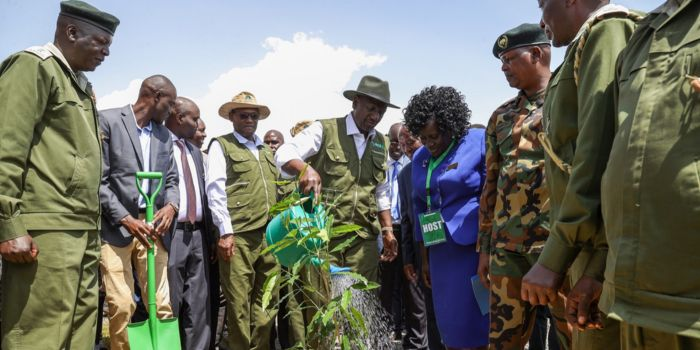
The initiative will involve distributing seedballs developed by the Kenya Forestry Research Institute (KEFRI), allowing seeds to be spread across remote locations where conventional tree-planting exercises may be challenging.
The President said the approach is intended to increase the pace of afforestation and support the restoration of degraded forest areas.
By taking advantage of aerial distribution, the government hopes to expand the reach of tree-growing initiatives beyond locations that can easily be accessed by communities and organised planting teams.
The strategy is part of wider efforts to strengthen environmental conservation and increase Kenya’s tree cover.
How Aerial Seedball Distribution Will Work
Seedballs offer an alternative way of distributing seeds across large areas, particularly where terrain, distance or limited accessibility can make manual planting difficult.
Under the proposed approach, aircraft will be used to spread the seedballs over targeted locations, helping conservation teams reach areas that might otherwise receive less attention.
KEFRI’s involvement provides a research-based foundation for the initiative, although successful restoration will also depend on factors such as suitable seed selection, rainfall, soil conditions and the survival of germinating seedlings.
Monitoring the areas after distribution will be important in establishing how effectively the approach contributes to long-term forest regeneration.
The government’s stated ambition is to make tree-growing efforts faster and more accessible while supporting the broader goal of restoring Kenya’s natural environment.
Ruto Launches Cocoa as a Scheduled Cash Crop
Alongside the afforestation plans, Ruto announced the launch of cocoa as a scheduled cash crop during an event in Kitale.
The President encouraged farmers in areas identified as suitable for cocoa cultivation to consider growing the crop, pointing to the range of products that can be manufactured from cocoa beans.
These include chocolate, beverage mixes and various food products, creating opportunities for agricultural production to support processing and value addition.
Cocoa is also a tree crop, meaning its cultivation could contribute to tree-growing efforts while offering farmers a potential source of income.
The initiative is intended to connect environmental conservation with economic opportunity, allowing farmers to explore commercial tree farming rather than viewing tree planting solely as a conservation activity.
KALRO and KEPHIS to Support Seedling Supply
To support the cocoa farming initiative, Ruto said the government would bring together the Kenya Agricultural and Livestock Research Organisation (KALRO) and the Kenya Plant Health Inspectorate Service (KEPHIS).
According to the President, KALRO has already undertaken research and has cocoa seedlings available for distribution.
The planned partnership is expected to support the production of sufficient seedlings to meet demand from farmers in regions identified as suitable for cocoa cultivation.
A reliable supply of healthy planting material will be important if the initiative is to expand beyond its initial launch.
Farmers will also need appropriate guidance on growing conditions, crop management, harvesting and marketing to help establish productive cocoa enterprises.
Can Cocoa Farming Boost Farmers’ Incomes?
Cocoa cultivation could create opportunities for farmers to diversify their agricultural activities, particularly if production is supported by reliable markets and local processing industries.
The crop can be used in several industries, including food manufacturing and beverage production. Developing these value chains could create additional opportunities beyond the sale of raw agricultural produce.
However, the long-term benefits will depend on the suitability of local growing conditions, access to quality seedlings, farm management practices and the availability of buyers.
For farmers, the key consideration will be whether cocoa can provide a sustainable return alongside their existing crops.
The government’s approach seeks to encourage a model in which growing trees can support both environmental objectives and household incomes.
Kenya Seeks to Link Environmental Restoration With Economic Growth
The two announcements reflect an approach that brings together conservation, agricultural diversification and rural economic development.
Aerial seedball distribution is intended to extend restoration efforts into remote locations, while cocoa farming could provide a commercial incentive for farmers to grow more trees in appropriate areas.
Both initiatives will require sustained implementation, technical support and monitoring to deliver lasting results.
For Kenya’s agricultural communities, the success of the cocoa programme will depend on whether farmers can access suitable planting materials, reliable advice and viable markets. Meanwhile, the afforestation campaign will need to demonstrate that seeds distributed through aerial methods can develop into healthy, established vegetation.
If effectively implemented, the initiatives could create opportunities to strengthen environmental protection while expanding the range of income-generating activities available to farmers.
Can Kenya turn tree planting into both an environmental success story and a sustainable source of income for farmers? The answer will depend on how effectively these ambitions are put into practice.

