
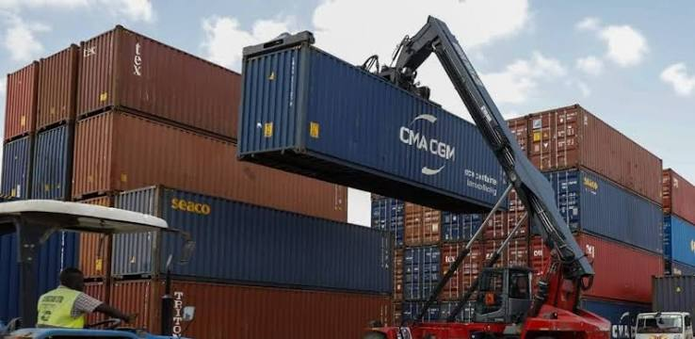
Kiharu MP and People’s Party of Kenya leader Ndindi Nyoro has thrown his support behind small-scale traders protesting the Kenya Revenue Authority’s new KSh3.2 million customs benchmark for consolidated cargo. Nyoro says the increase comes at a difficult time for importers already dealing with rising freight costs.
Highlights
- Ndindi Nyoro has opposed KRA’s new KSh3.2 million cargo benchmark.
- The benchmark increased from KSh2.5 million.
- Small-scale traders say the change could raise their operating costs.
- KRA maintains the figure is not a flat tax on every container.
- Protests over the new rules have disrupted business in parts of Nairobi.
Main Story
Nyoro Backs Small-Scale Traders
Kiharu MP Ndindi Nyoro has criticised the Kenya Revenue Authority’s decision to raise the customs benchmark for consolidated cargo.
Nyoro said traders operating in major commercial centres such as Nyamakima, Gikomba, Kamukunji, Nairobi CBD and Eastleigh should be heard as the government reviews the new system.
In a statement shared on X on Friday, August 28, the MP argued that the increase could put additional pressure on businesses already facing higher shipping costs.
He also expressed solidarity with traders protesting the new valuation rules and urged that they should not be intimidated.
What Has Changed?
The customs benchmark for general containerised consolidated cargo has increased from KSh2.5 million to KSh3.2 million.
That represents an increase of KSh700,000, or approximately 28 per cent.
Consolidated cargo is particularly useful to small-scale importers who cannot fill an entire shipping container on their own. Several traders can place their goods in the same container and share shipping and clearance expenses.
The arrangement is commonly used by businesses importing items such as clothes, electronics and household products.
Why KRA Changed the Benchmark
KRA has defended the adjustment, saying the previous system created opportunities for some importers to undervalue their goods and reduce the amount of tax paid.
The authority has also raised concerns about larger businesses allegedly taking advantage of consolidation arrangements designed primarily to support smaller importers.
KRA says the new approach is intended to strengthen customs controls and address risks associated with under-declaration.
KRA Says It Is Not a Flat Tax
Amid growing criticism, KRA has clarified that the KSh3.2 million figure should not be treated as a compulsory tax imposed on every container.
The authority says it is a reference point used in the simplified clearance of consolidated cargo.
According to KRA, the actual customs value and taxes payable will depend on the type, classification and value of goods contained in a shipment.
Traders who believe the benchmark does not accurately represent their cargo can have their goods assessed individually.
KRA has also suggested deconsolidation as an option, allowing customs officials to examine and value individual consignments based on their specific contents.
Why Traders Are Protesting
Small-scale importers have expressed concern that the new system could increase their costs at a time when many businesses are already operating under tight profit margins.
Traders say the combination of higher customs-related expenses and rising freight charges could make importing goods more expensive.
Some fear they may eventually have to increase retail prices to recover the additional costs.
The concerns have been particularly strong in Nairobi’s major trading hubs, where thousands of businesses depend on imported merchandise.
Nairobi Businesses Disrupted
The disagreement escalated on Friday as traders staged demonstrations in parts of Nairobi.
Some businesses in the CBD reportedly closed as traders protested against the new customs rules and called for government intervention.
Police used tear gas to disperse some protesters as tensions rose.
With traders demanding a review and KRA maintaining that the benchmark is not a blanket tax, the dispute is likely to remain a major talking point among Kenya’s small-business community.
The Bigger Question
At the heart of the dispute is a difficult balance between protecting government revenue and keeping the cost of doing business manageable for small traders.
While KRA says stronger valuation controls are necessary to prevent tax evasion, traders argue that the new system could put additional pressure on businesses that are already struggling with rising operating costs.
The coming days will determine whether the government and traders can find common ground before the dispute causes further disruption in Kenya’s major commercial centres.
For thousands of small traders, the debate is ultimately about one question: how can Kenya raise revenue without making it harder for ordinary businesses to survive?

