
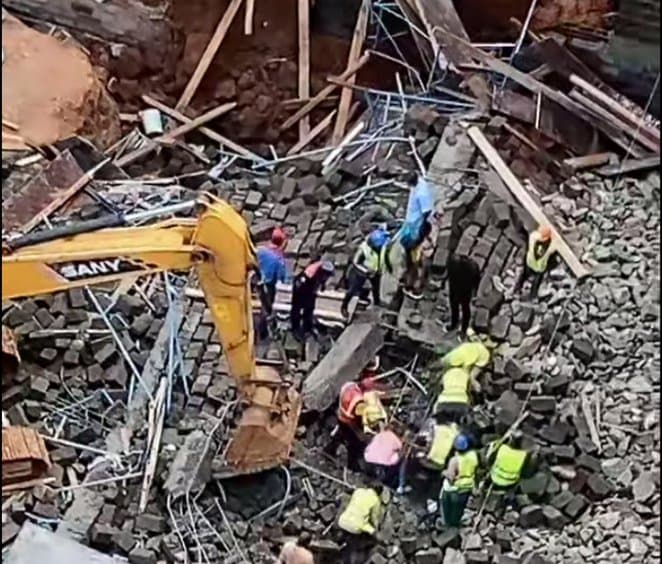
Kenya’s construction industry is facing renewed scrutiny following a series of deadly building collapses in Nairobi that have exposed serious concerns about development approvals, regulatory oversight and enforcement of safety standards. With investigations uncovering allegations of forged approval documents and buildings reportedly proceeding without the necessary permits, residents are demanding accountability from government agencies tasked with protecting the public. The latest concerns follow deadly incidents in South C and Eastleigh, leaving questions about whether Kenya’s construction regulations are being properly enforced.
Highlights
- South C residents are demanding the release of findings into a January 2026 building collapse that killed two people.
- An October 23 collapse of an 18-storey building in Eastleigh claimed eight lives and injured several others.
- Nairobi County officials told an Assembly committee that the Eastleigh building had no approved architectural or structural plans.
- Documents allegedly submitted to the National Construction Authority (NCA) were described by a county official as forgeries.
- Residents are demanding independent structural assessments and accountability for developers and officials found responsible.
Main Story
Deadly Building Collapses Put Kenya’s Construction Industry Under Scrutiny
Kenya’s building and construction sector is facing growing questions over compliance with safety regulations following two major building collapses in Nairobi that claimed several lives.
The incidents have brought renewed attention to the responsibilities of government agencies involved in approving, inspecting and supervising construction projects.
Among the institutions facing scrutiny are the National Construction Authority (NCA), Nairobi City County, the Engineers Board of Kenya (EBK), the Board of Registration of Architects and Quantity Surveyors (BORAQS), and the National Environment Management Authority (NEMA).
Concerns have particularly centred on whether developers are obtaining the necessary approvals before commencing construction and whether regulatory authorities are taking sufficient action against projects that violate established requirements.
The situation has also been complicated by allegations that some developers have relied on forged documents to demonstrate compliance with approval procedures.
South C Residents Demand Answers Over January Building Collapse
Residents of South C are seeking answers following the January 2, 2026, collapse of a multi-storey building under construction along Muhoho Avenue.
The disaster claimed two lives and raised immediate concerns about the safety of neighbouring properties.
In a statement issued on April 17, 2026, the South C Residents Association renewed its demand for the government to publish findings from a multi-agency investigation into the incident.
The association revealed that it had written to the Office of the Director of Public Prosecutions and the Inspector General of Police on March 31, requesting investigations into the circumstances surrounding the collapse.
It also called for possible criminal proceedings against individuals or institutions found culpable, including the developer, contractor, county officials responsible for development approvals and the professional consultants involved in the project.
The residents questioned why construction had continued despite enforcement notices reportedly issued against the development in May, July and December 2025.
They also alleged that officers attempting to enforce the notices had encountered physical attacks.
NCA Had Announced Investigations Into the Incident
Following the South C disaster, the National Construction Authority announced on January 7 that it would conduct a formal inquiry alongside other relevant agencies.
The investigation was expected to involve the Engineers Board of Kenya, BORAQS, Nairobi City County and the Directorate of Criminal Investigations.
The authority also announced plans for a wider compliance audit targeting buildings across the country to identify developments that might have violated construction regulations.
In its initial update, the NCA stated that the collapsed building had been registered on November 8, 2023, with the required statutory approvals at the time of registration.
The approved structural designs reportedly provided for a 12-storey building. However, the authority said the project was non-compliant when it collapsed.
Investigators also began collecting samples from the site to help establish the possible cause of the disaster.
Despite those announcements, South C residents say they have not received satisfactory updates on the findings of the inquiry or the progress of the proposed nationwide audit.
Eastleigh Collapse Raises More Questions Over Building Approvals
The concerns surrounding construction safety intensified following the October 23, 2026, collapse of an 18-storey building along Ninth Street in Eastleigh, Nairobi.
The disaster claimed eight lives and left several other people injured, triggering investigations into how the structure had been allowed to progress to multiple floors without the necessary construction approvals.
The matter was subsequently presented before the Nairobi County Assembly’s Urban Planning Committee, where county officials provided details about the development applications submitted by the property owner.
An Assistant Director for Development Control told the committee that Nairobi City County had approved a change of use from private residential to commercial and residential purposes. However, the approval did not extend to the actual construction of the proposed building.
The official explained that the county received the first application on November 25, 2024, proposing a development consisting of a basement and 15 floors.
The application attracted an invoice of approximately KSh2 million, which was never paid, preventing it from progressing through the approval process.
A second application was submitted on November 14, 2025, attracting an invoice of approximately KSh1.1 million. Although the payment was made, the application remained unapproved because the developer had not fulfilled several outstanding requirements.
These included inadequate parking arrangements, proposed shops in the basement and the failure to obtain clearance from the Kenya Civil Aviation Authority.
The official maintained that the county had not approved the building’s architectural or structural plans.
County Official Alleges Forged Approval Documents
One of the most concerning revelations before the Assembly committee involved documents allegedly presented to the National Construction Authority to demonstrate that Nairobi County had authorised the development.
The Assistant Director told the committee that the documents did not originate from City Hall and were therefore suspected to be forged.
The disclosure has raised questions about how the project was registered by the NCA and whether the documents submitted during the registration process were adequately verified.
According to the information presented, the NCA registered the project on July 30, 2025, listing a company as the developer and another firm as the contractor.
The revelations have placed renewed attention on the relationship between county development approvals and the NCA’s project registration procedures.
The County Assembly committee has also expressed concern over individuals summoned to appear before it who failed to attend.
However, members maintained that those mentioned in the investigation should be given an opportunity to respond to the allegations before any conclusions are reached.
Separately, the county’s Director of Planning and Compliance raised concerns about alleged political interference in development approval processes.
The claims remain subject to further investigation.
South C Residents Seek Safety Assessment of Neighbouring Apartments
Beyond the investigation into the collapsed building, South C residents are also demanding answers about the safety of neighbouring developments.
Particular concern has been raised over Bridge Port Apartments, a 15-storey building located near the site of the January collapse.
In their April 17 statement, the residents called for an independent structural assessment to establish whether the apartments were safe for occupation.
They questioned whether the development had originally been authorised for 10 floors or the 15 floors currently standing.
The association also wanted authorities to establish whether the neighbouring collapse caused structural damage to the apartments, particularly their supporting pillars.
In a follow-up communication dated May 11, 2026, the residents repeated their demand for the government to release the findings of the safety assessment and the wider South C investigation.
They asked authorities to issue a public safety certificate if the building was found to be structurally sound or take appropriate enforcement measures if it was considered dangerous.
The residents also sought information about any disciplinary action taken against developers and construction professionals found to have violated building regulations.
Additionally, they wanted the government to disclose how many buildings had been inspected since January, how many had been declared unsafe and whether any occupants had been evacuated.
Institutions Responsible for Regulating Kenya’s Construction Industry
Kenya has several institutions mandated to oversee different stages of construction, from environmental assessment and professional registration to development approvals and building inspections.
Their responsibilities include:
- National Construction Authority (NCA): Registers construction projects and contractors while overseeing compliance with construction industry requirements.
- County Governments: Approve building plans, issue development permits, regulate land use and enforce planning regulations.
- Engineers Board of Kenya (EBK): Regulates professional engineers and engineering firms operating in the country.
- Board of Registration of Architects and Quantity Surveyors (BORAQS): Oversees the registration and professional conduct of architects and quantity surveyors.
- National Environment Management Authority (NEMA): Regulates environmental compliance and issues relevant environmental licences for qualifying projects.
The NCA’s project registration requirements include approved architectural and structural drawings, county development approvals and other relevant statutory licences.
Developers are also expected to engage properly registered contractors and qualified professionals with valid practising licences.
National Building Code 2024 Sets Construction Standards
The National Building Code 2024 provides the regulatory framework governing building design, construction, safety, inspections and maintenance.
Published in March 2024, the code came into force in March 2025, introducing updated requirements intended to strengthen construction standards and improve public safety.
However, the recent incidents have raised questions about whether these regulations are being effectively implemented and whether authorities have sufficient capacity to monitor developments throughout the construction process.
For residents, the concern is no longer limited to buildings that have already collapsed. There are growing calls for authorities to identify potentially unsafe structures before another disaster occurs.
As investigations into the South C and Eastleigh incidents continue, Kenyans are seeking transparency, accountability and stronger enforcement of construction laws.
The deaths in South C and Eastleigh have exposed serious questions about the enforcement of construction regulations in Kenya. Beyond investigations and public statements, residents want accountability and concrete action to ensure that developers cannot bypass safety requirements at the expense of human lives. How many more buildings must collapse before construction regulations are enforced as strictly as they are written?

