
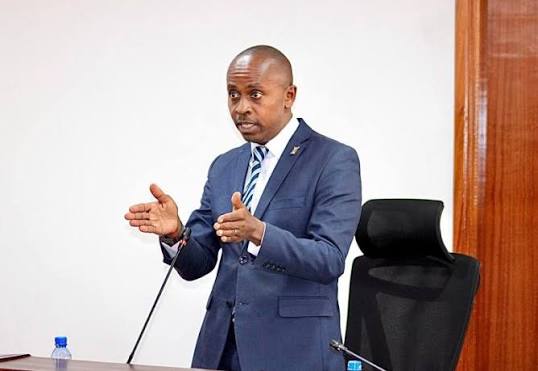
Dagoretti South MP John Kiarie has defended President William Ruto’s administration, highlighting improvements in agriculture, healthcare, education, employment and infrastructure as evidence of the country’s economic progress since 2022. Speaking after the President’s State of the Nation Address, Kiarie maintained that the government’s performance should be assessed using measurable economic indicators and development achievements rather than political narratives.
Highlights
- Inflation reportedly declined from 9.6% in 2022 to 4.1% in 2025.
- Maize production increased to 71 million bags.
- More than 33.7 million Kenyans have registered with the Social Health Authority (SHA).
- The government reports employing 100,000 teachers and constructing more than 313,000 housing units.
- Kazi Majuu has reportedly facilitated overseas employment for over 707,000 Kenyans.
Main Story
John Kiarie Defends Ruto’s Economic Record
Dagoretti South MP John Kiarie has defended the economic performance of President William Ruto’s administration, pointing to various government initiatives and development projects implemented since the Kenya Kwanza administration took office in 2022.
In his remarks following the President’s State of the Nation Address, Kiarie argued that the country’s progress should be evaluated through economic statistics and tangible development outcomes.
He said Kenyans needed to consider the economic challenges the country faced in 2022 and the interventions introduced by the government to stabilise the economy.
According to the legislator, the figures presented by the President demonstrate progress across several critical sectors, despite the continued public debate surrounding the cost of living and economic challenges.
Inflation Drops as Agricultural Production Increases
Among the achievements highlighted by Kiarie was the reduction in inflation from 9.6 per cent in 2022 to 4.1 per cent in 2025.
He also pointed to increased agricultural production, particularly in the maize sector, where national output reportedly reached 71 million bags.
The MP attributed the improvement partly to government interventions targeting agricultural productivity and the cost of farm inputs.
He cited the reduction in fertiliser prices to KSh2,000 for a 50-kilogramme bag, saying the intervention had helped farmers access essential inputs at more affordable rates.
Government Highlights Progress in Healthcare and Education
Kiarie also highlighted developments in the healthcare sector, noting that more than 33.7 million Kenyans had registered under the Social Health Authority (SHA).
He described the registration figures as an indication of the government’s efforts to expand access to healthcare services.
In education, the MP cited the recruitment of 100,000 teachers, arguing that the additional workforce would help address staffing gaps in public schools and improve the learning environment.
More Than 313,000 Housing Units Reportedly Constructed
The Affordable Housing Programme was another initiative highlighted by the legislator.
Kiarie said more than 313,000 housing units had been constructed under the government’s housing agenda.
He noted that the programme was also creating employment opportunities in the construction industry and supporting economic activities linked to building materials, transport and other services.
Kazi Majuu and NYOTA Programmes Highlighted
On employment, Kiarie pointed to the Kazi Majuu programme, which he said had helped more than 707,000 Kenyans secure employment opportunities abroad.
He also highlighted the NYOTA programme, noting that more than 330 beneficiaries had benefited from its interventions targeting young people.
The initiatives form part of the government’s broader strategy to expand employment opportunities, support entrepreneurship and improve the financial prospects of Kenyan households.
Over 28,000 Kilometres of Roads Upgraded
Infrastructure development was also central to Kiarie’s defence of the administration.
The MP claimed that more than 28,000 kilometres of roads had been upgraded to tarmac, including routes that communities had waited decades to see developed.
He illustrated the situation by referencing a parliamentary representative who has served since the 1980s but is only now seeing a tarmac road constructed towards his home area.
Kiarie argued that such projects demonstrate the importance of addressing longstanding infrastructure gaps, particularly in communities that have experienced years of delayed development.
Kiarie Calls for Focus on Development Results
Concluding his remarks, Kiarie maintained that the government’s performance should be assessed through its economic indicators and the impact of development projects across the country.
He pointed to agriculture, healthcare, education, housing, employment and infrastructure as sectors where the administration says it has recorded progress.
His comments come amid continued public debate over taxation, unemployment, the cost of living and the effectiveness of government policies.
Ultimately, the administration faces the challenge of ensuring that the reported economic gains translate into meaningful improvements in the daily lives of ordinary Kenyans.
While government figures point to progress in several sectors, the real measure of economic recovery will be how much ordinary Kenyans feel the difference through lower living costs, better services, decent jobs and improved living standards.

