
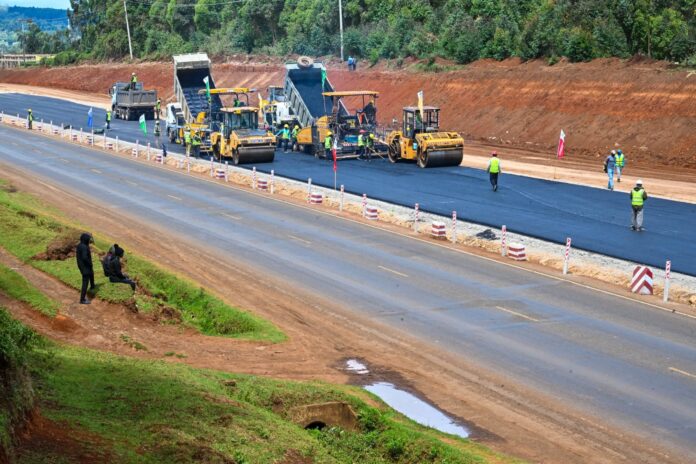
The company behind the Nairobi Expressway is set to take on a bigger role in Kenya’s road infrastructure, with Treasury Cabinet Secretary John Mbadi revealing that China Road and Bridge Corporation (CRBC) will also become an investor in the Rironi-Mau Summit road project.
The arrangement will see the Chinese firm participate alongside the National Social Security Fund (NSSF) and other investors under a Public-Private Partnership (PPP) model. However, the financing structure comes with an important implication for motorists: toll charges are expected to be higher because private investors must recover their capital and account for investment risks.
Highlights
- CRBC will serve as both contractor and investor in the Rironi-Mau Summit road project.
- NSSF and other local and foreign investors are part of the financing arrangement.
- Motorists should expect higher toll charges due to private investment risks.
- Lenders will receive payments before equity investors earn returns.
- Mbadi has called for closer examination of rising Nairobi Expressway operating costs.
Main Story
CRBC Takes on Dual Role in Rironi-Mau Summit Project
Treasury Cabinet Secretary John Mbadi has disclosed that China Road and Bridge Corporation (CRBC), the company responsible for constructing the Nairobi Expressway, will also participate as an investor in the Rironi-Mau Summit road project.
Speaking during an interview with a local television station on Tuesday, Mbadi explained that CRBC’s involvement goes beyond its responsibility as the project’s contractor.
The company is part of an investment consortium that includes NSSF and other investors under a Public-Private Partnership arrangement.
According to the CS, the Rironi-Mau Summit project has a different financing structure from the Nairobi Expressway, despite the involvement of the same Chinese company.
Mbadi dismissed claims that the two projects were directly connected, explaining that they were developed and negotiated independently.
He also revealed that the initial plan for the Rironi-Mau Summit road involved a different contractor before the current arrangement was established.
Why Motorists Should Expect Higher Toll Charges
One of the biggest concerns surrounding the project is how the government intends to repay investors and lenders once the road begins generating toll revenue.
Mbadi explained that lenders will have priority when revenue is collected, meaning borrowed funds must be repaid before shareholders can receive returns on their investments.
He maintained that private investment comes with financial risks, which must be reflected in the overall cost of delivering the infrastructure project.
The Treasury CS consequently warned that motorists would likely pay higher toll charges compared to a road constructed entirely using government revenue.
He explained that if taxpayers financed the entire project, the road could potentially be free to use or attract significantly lower toll charges.
However, bringing in private investors means the project must generate sufficient revenue to cover financing obligations, investment risks and expected returns.
NSSF Pension Funds to Be Part of the Investment
Mbadi also clarified that NSSF’s participation would involve investing pension funds rather than providing direct government financing.
He indicated that foreign investors, including Chinese pension funds and insurance companies, were also expected to participate in similar infrastructure investment opportunities.
The arrangement is expected to bring together different sources of capital to support the construction and financing of major road infrastructure.
However, the involvement of pension funds also places the spotlight on how investments will be structured to protect contributors’ savings while generating sustainable returns.
Questions Raised Over Nairobi Expressway Financial Performance
Mbadi also addressed concerns about the financial performance of the Nairobi Expressway, which operates under a separate PPP arrangement largely managed by Moja Express.
During the discussion, the interviewer highlighted figures showing that the expressway’s revenue increased from KSh 7.1 billion in 2024 to KSh 9.6 billion in 2025.
However, its direct operating costs also climbed significantly, rising from KSh 9 billion to KSh 14.7 billion within the same period.
The figures raised questions about why the project’s expenses were increasing faster than its revenue, despite the growing income generated from motorists.
Mbadi acknowledged that the financial records required closer examination before conclusions could be reached.
He suggested that the increase could be linked to external pressures, including disruptions in global supply chains, but said further investigation was necessary to establish the actual reasons.
The CS also questioned whether the original project costing had been properly calculated, noting that any shortcomings in the design or implementation process would need to be identified.
He maintained that reviewing the actual contract and detailed financial records would be necessary before making a final assessment of the expressway’s long-term financial position.
The discussion has renewed attention on how Kenya structures major infrastructure partnerships, particularly projects involving foreign companies, pension funds and private investors.
For motorists, the biggest concern remains how these financial arrangements will eventually affect the amount they pay to use public roads.

