
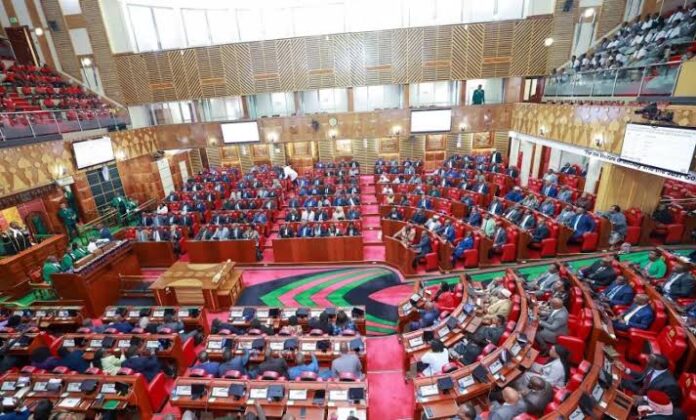
Kenyan families could soon be protected from the distressing experience of having loved ones held in hospitals over unpaid medical bills after the National Assembly passed a proposed law seeking to outlaw the practice. The legislation, sponsored by Kirinyaga Woman Representative Njeri Maina, aims to protect discharged patients and bereaved families from having their freedom or dignity compromised because of outstanding hospital expenses.
Highlights
- The National Assembly has passed a Bill seeking to prohibit hospital detention over unpaid bills.
- The proposal also seeks to prevent hospitals from withholding bodies over outstanding medical expenses.
- Kirinyaga Woman Representative Njeri Maina sponsored the legislation.
- Health Committee Chairperson James Nyikal highlighted the importance of regular SHA contributions.
- The Bill will now move to the Senate before being forwarded to President William Ruto for assent.
Main Story
MPs Move to Protect Patients and Bereaved Families
The National Assembly has approved a proposed law that seeks to stop hospitals from holding discharged patients or refusing to release bodies of deceased persons because of unpaid medical bills.
The Bill, sponsored by Kirinyaga Woman Representative Njeri Maina, is intended to provide legal protection to patients and families who have found themselves unable to secure the release of their loved ones due to outstanding hospital charges.
During parliamentary discussions, Maina and fellow legislators backing the proposal raised concerns that some healthcare facilities have continued using unpaid bills as justification for restricting patients or withholding bodies.
They argued that existing legal provisions have not sufficiently prevented the practice, creating a need for clearer legislation to protect affected families.
Hospitals Could Lose Power to Detain Discharged Patients
Under the proposed legislation, medical facilities would not be permitted to keep patients within their premises after doctors have formally cleared them for discharge simply because they cannot afford to settle their bills.
The same protection would apply to deceased patients, with hospitals prohibited from retaining their bodies as a way of recovering outstanding payments.
The proposal seeks to separate the responsibility of settling medical expenses from the fundamental rights and dignity of patients and their families.
For families already dealing with illness, financial pressure or bereavement, the proposed changes could offer significant relief by ensuring that medical debt does not become an obstacle to freedom or the final farewell to a loved one.
James Nyikal Highlights Role of SHA
While supporting efforts to address the issue, National Assembly Health Committee Chairperson James Nyikal argued that sustainable healthcare financing would also be necessary to prevent patients from accumulating bills they cannot afford.
Nyikal encouraged Kenyans to maintain regular contributions to the Social Health Authority (SHA), saying a stronger health insurance system could help ease the financial difficulties experienced by patients and their families.
His remarks introduced another dimension to the debate, with healthcare financing emerging as an important part of finding a lasting solution to hospital debt disputes.
Bill Heads to the Senate
Following its passage in the National Assembly, the proposed legislation will now be considered by the Senate.
If approved and subsequently presented to President William Ruto for assent, it will establish a clear legal prohibition against hospitals detaining discharged patients or withholding deceased persons’ bodies because of unpaid medical expenses.
The proposed changes could mark an important development in protecting patients’ rights and ensuring grieving families are not subjected to additional hardship when trying to collect the remains of their loved ones.
For now, Kenyans will be watching the next stages of the legislative process to see whether the proposed protections become law.
Medical debt should never strip someone of their freedom or deny a grieving family the chance to lay their loved one to rest. If this Bill becomes law, could it finally bring an end to one of the most painful experiences facing Kenyan families?

