
Health Cabinet Secretary Aden Duale has announced a major milestone in Kenya’s response to the Ebola outbreak, revealing that authorities have successfully traced all 135 people who came into contact with the country’s first reported patient. The announcement comes as the government steps up efforts to contain the disease, reassure international partners and convince Saudi Arabia to reconsider travel restrictions imposed on Kenya following the outbreak.
Highlights
- Kenya has completed contact tracing for all 135 identified Ebola contacts.
- The group includes 45 healthcare workers currently under quarantine.
- Authorities also traced an individual who travelled with the index patient to Mogadishu, Somalia.
- Saudi Arabia is reportedly reviewing its travel advisory following diplomatic engagements.
- The government has defended emergency Ebola regulations introduced without the usual public participation process.
Main Story
Kenya Completes Ebola Contact Tracing
Kenya has successfully identified all 135 individuals who came into contact with its first reported Ebola patient, according to Health Cabinet Secretary Aden Duale.
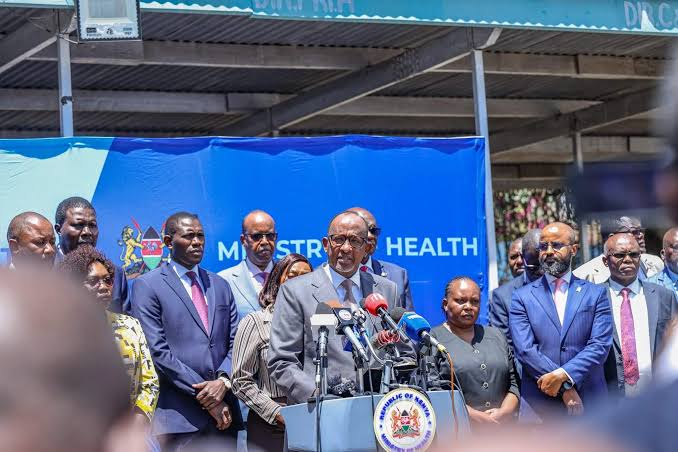
Speaking before the National Assembly’s Committee on Delegated Legislation on Tuesday, November 3, Duale said the country had achieved full contact tracing, describing the development as an important achievement in the ongoing public health response.
The individuals identified include passengers and crew members who travelled alongside the index patient, airport personnel, immigration and customs officers, healthcare workers and members of the patient’s family.
Among those identified are 45 healthcare workers who have been placed under quarantine as a precautionary measure.
Duale argued that Kenya’s response deserved international recognition rather than travel restrictions, maintaining that the government had acted swiftly to identify potentially exposed individuals and prevent further transmission.
Kenya Tracks Contact Who Travelled to Somalia
The Health CS also revealed that investigators had successfully located an individual who had travelled alongside the index patient before proceeding to Mogadishu, Somalia.
Kenyan authorities further communicated with other countries through which the patient and identified contacts had travelled, in accordance with international health requirements.
The government says these measures are part of a broader strategy to prevent the outbreak from spreading beyond Kenya’s borders.
Duale Appeals to Saudi Arabia Over Travel Restrictions
Beyond containing the outbreak, the government is now seeking to address the economic and diplomatic consequences of travel restrictions imposed by Saudi Arabia.
Duale questioned the decision, arguing that international public health guidelines favour effective surveillance, early detection and disease containment instead of broad travel restrictions.
He disclosed that Kenya’s Ministry of Foreign Affairs had formally engaged Saudi authorities over the matter, with several international health institutions also intervening.
The World Health Organization (WHO) and Africa Centres for Disease Control and Prevention (Africa CDC) have reportedly communicated with Saudi Arabia regarding the restrictions.
Duale said he had personally raised the matter with Saudi Arabia’s Health Minister.
According to the CS, Saudi authorities are reviewing their travel advisory, with Kenya hopeful that the restrictions will be reconsidered following the diplomatic engagements.
Government Defends Emergency Ebola Regulations
During the parliamentary session, Duale also addressed concerns surrounding the government’s decision to introduce Ebola prevention and control regulations without following the usual public participation process.
He defended the move, citing Section 5A(2) of the Public Health Act, which he said gives the Health Ministry authority to introduce urgent measures when faced with a serious public health threat.
According to the CS, waiting for the conventional consultation process could have delayed interventions needed to protect Kenyans.
He maintained that the regulations were introduced to enable authorities to respond quickly to the outbreak and strengthen disease-control measures.
Quarantined Individuals Receiving Medical Support
Duale further assured lawmakers that everyone placed under quarantine was receiving the necessary care and support.
He said each individual had been allocated a separate room to minimise the possibility of transmission, alongside access to food, accommodation and continuous medical monitoring.
Healthcare workers involved in the response have also undergone specialised training and received personal protective equipment (PPE).
The Ministry has additionally trained medical personnel on safe burial procedures, which are particularly important in preventing the spread of Ebola during the handling of deceased patients.
Government Gives Hopeful Update on Patients
The CS also provided an encouraging assessment of the situation involving patients receiving treatment and individuals currently under quarantine.
Although he did not disclose detailed medical information during the committee proceedings, he hinted that the Ministry had positive developments it hoped to communicate to the public.
The government says surveillance, testing and containment operations remain active as health teams continue monitoring the situation.
With all 135 contacts from the initial case reportedly traced, Kenya is now looking to sustain its containment efforts while restoring confidence among international partners.
Kenya’s ability to trace all 135 contacts marks an important step in its Ebola response, but the bigger test remains maintaining public confidence and preventing further infections. As the government seeks to reopen diplomatic and travel channels, can its containment efforts convince the international community that Kenya is managing the health threat effectively?

