
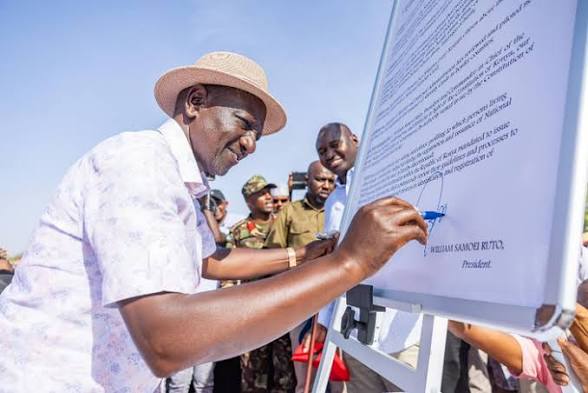
A National Identity Card can be the first step towards accessing opportunities in employment, education, healthcare, banking and business. For millions of Kenyans, it is also an important document when registering for government programmes, pursuing affordable housing and completing land-related transactions.
The Kenyan government has pursued measures to make ID registration more accessible, including the removal of application and replacement fees in March 2025. The State Department for Internal Security and National Administration, led by Principal Secretary Dr Raymond Omollo, has also supported efforts to bring registration and collection services closer to communities through local administration structures.
The initiative carries a wider message of Usawa ni Sawa equality for all. Beyond helping individuals obtain identification, improved access can support community participation in government programmes, strengthen service planning and help authorities identify areas that need greater attention.
For young Kenyans entering the job market, farmers seeking agricultural support and families navigating public services, access to identification can be an important starting point.
Highlights
- The removal of National ID application and replacement fees in March 2025 aimed to reduce the financial burden on eligible applicants.
- National IDs support identity verification for services linked to healthcare, education, employment, banking and housing.
- Wider registration can help eligible farmers, young people, traders and community groups meet programme requirements.
- Identification and programme records can inform planning for healthcare, subsidies, infrastructure and social protection.
- Community registration outreach can help address barriers affecting residents of remote and historically underserved areas.
Main Story
1. Usawa ni Sawa: Equal Access to Identification
Access to official identification has not always been straightforward for everyone. Residents of remote areas and historically underserved regions, particularly parts of Northern Kenya, may face challenges related to travel distances, financial constraints and administrative procedures.
When an eligible citizen cannot obtain the required documents, the effects can extend into other areas of life. Applications for jobs, financial services and government programmes may become more difficult to complete.
The government’s wider registration efforts seek to reduce such obstacles and make identification more accessible regardless of where an eligible Kenyan lives.
The Usawa ni Sawa principle emphasises that access to identification should not be determined by a person’s location or financial circumstances.
It also highlights the importance of ensuring that communities historically affected by documentation challenges can participate more fully in public services and economic opportunities.
2. Removal of National ID Application Fees
The removal of application and replacement fees in March 2025 was intended to ease the financial burden associated with obtaining or replacing a National ID.
For people facing economic difficulties, even a relatively small administrative expense can complicate access to essential documentation. Removing these charges was therefore an effort to address one of the barriers facing eligible applicants.
However, the cost of an application is not the only challenge. Travel expenses, limited access to registration facilities and difficulties understanding administrative procedures can also affect applicants.
Community registration and collection initiatives can complement the fee removal by helping residents access services closer to home.
The broader objective is to make the process more accessible while ensuring applicants understand the applicable registration and collection requirements.
3. How National IDs Benefit Individuals
A National ID can help Kenyans meet identification and verification requirements for numerous services. Actual access to benefits depends on the rules of each programme and any additional eligibility conditions.
Healthcare through SHA
Identification can support registration and identity verification for eligible users of the Social Health Authority (SHA). Improved access to National IDs may help remove one administrative obstacle for people seeking healthcare coverage.
Social security through NSSF
Workers, including those in the informal sector, may require identification to register with the National Social Security Fund (NSSF). Easier access to IDs can help eligible workers complete registration for retirement savings.
Fertiliser subsidies and agricultural support
Farmers may need identification to register through the Kenya Integrated Agricultural Management Information System (KIAMIS) and participate in eligible agricultural support programmes. Wider access to identification can help farmers meet the relevant requirements.
Affordable housing through Boma Yangu
Kenyans interested in affordable housing may need identification to complete Boma Yangu registration. Access to a National ID can therefore help eligible applicants proceed with the required application process.
Education and HELB financing
Students seeking higher education financing may need identification when applying for loans through the Higher Education Loans Board (HELB). Accessible registration services can help young people address documentation requirements as they pursue university, college and technical training opportunities.
Government services through eCitizen
National IDs help verify identity when applying for services such as passports, licences and certificates through relevant government processes. Easier access to identification can help eligible citizens complete these procedures.
Employment and salaries
Employers commonly require identity documents during recruitment and employment verification. Identification may also be needed for payroll registration and other administrative procedures.
For young people searching for their first jobs, obtaining the necessary documents can help them navigate recruitment requirements.
Youth support through NYOTA
Young people seeking to participate in programmes such as NYOTA may need to meet identity verification requirements. Improving access to IDs can help eligible applicants prepare the necessary documentation.
Bank accounts, SACCOs and mobile services
Banks and SACCOs generally require customers to verify their identities when opening accounts or accessing financial services. National IDs are also important for registering SIM cards in an individual’s name.
These requirements make identification relevant to participation in Kenya’s formal financial and digital economy.
Business registration and enterprise financing
Entrepreneurs may need identification when registering businesses, obtaining permits and applying for financing. Easier access can help reduce one practical obstacle for people seeking to formalise or expand their businesses.
Land, property and passports
Identification can be required when verifying identity for land registration, inheritance and property transfers, subject to applicable legal requirements. It is also an important document for eligible adult passport applicants.
For Kenyans pursuing opportunities abroad, obtaining the necessary identification can help them begin the relevant travel and employment procedures.
4. Supporting Farmers and Agricultural Subsidies
Access to identification can also affect how farmers participate in agricultural support programmes.
Eligible farmers may need to register through KIAMIS to access subsidised fertiliser and other forms of agricultural assistance. When registration is easier, more farmers may be able to complete the verification procedures required by these programmes.
The benefits can extend beyond individual farms.
When farmers across a ward or county register, their combined records can help authorities understand demand for agricultural inputs, including the quantities and distribution points required to serve different areas.
Better registration information can also support efforts to verify beneficiaries, limit duplicate records and identify communities that may be underserved.
However, registration data must be considered alongside agricultural needs, acreage, crop requirements and other relevant information to support effective distribution and planning.
5. Improving Healthcare and Social Protection Planning
Wider access to identification can help eligible citizens complete the registration and verification processes associated with healthcare and social assistance programmes.
For SHA, enrolment and service-use information can contribute to understanding healthcare coverage and identifying areas where demand for services may exceed available capacity.
For social protection programmes such as Inua Jamii, identification can support beneficiary verification and coordination between institutions responsible for delivering assistance.
More complete records may help authorities identify gaps, improve programme administration and plan interventions for vulnerable households.
Nevertheless, identification alone does not guarantee access to healthcare coverage or cash transfers. Beneficiaries must still satisfy the applicable programme requirements.
6. Affordable Housing and Community Development
National ID access can help eligible Kenyans complete registration for affordable housing opportunities through Boma Yangu.
When more residents register, aggregated application information may provide insight into housing demand across counties and communities. This information can complement other assessments when authorities plan housing projects and supporting infrastructure.
The same principle applies to broader development planning. Registration and programme data can contribute to decisions about roads, water services, markets and other public amenities when combined with population figures and assessments of local needs.
For county governments, such information may help identify areas requiring additional investment or improved service delivery.
The intended benefit is not simply to increase registration numbers, but to use reliable information to support decisions that respond to the needs of communities.
7. Supporting Counties and Local Businesses
National ID access can help residents meet identification requirements for a range of county-level and community activities.
Market traders may need identification when registering businesses, applying for county permits or seeking formal financing. Members of cooperatives, SACCOs and women’s groups may also require identity verification when registering organisations or applying for eligible development support.
For young people, accessible registration services can help them prepare for employment, training and enterprise programmes that require identification.
Local administrators, including chiefs and assistant chiefs, can help connect residents with registration services and communicate relevant procedures.
These efforts are particularly important in areas where travelling to registration centres can be expensive or time-consuming.
Improved access can also help communities participate more fully in formal economic activities, although business permits, financing and programme participation remain subject to their respective requirements.
8. National Planning and Fair Distribution of Resources
Identification and programme registration records can provide useful information for national and county development planning.
For example, agricultural records may help authorities estimate demand for fertiliser subsidies, while healthcare enrolment information can contribute to assessments of service coverage.
Housing registration can help indicate demand for affordable homes, and social protection records can support beneficiary verification.
When combined with census data, population statistics and assessments of vulnerability, these records can help government institutions identify gaps and make more informed decisions about resource allocation.
The information can also complement county planning for infrastructure such as roads, water systems and markets.
However, registration figures should not be treated as a complete measure of need. Effective planning also requires reliable data, transparent decisions and attention to communities whose circumstances may not be fully reflected in administrative records.
9. National IDs and Disaster Relief
Identification can play an important role when government agencies coordinate assistance for communities affected by floods, drought and other emergencies.
When distributing relief, authorities may need to establish the identities of beneficiaries and coordinate support between national and county institutions.
Accessible identification can help eligible residents complete verification processes and participate in relevant assistance programmes.
However, people who have lost documents, live in remote locations or have never obtained identification may face additional difficulties during emergencies.
Alternative verification arrangements are therefore important to ensure that the absence of a National ID does not automatically prevent vulnerable people from being considered for urgent humanitarian assistance.
The broader objective is to improve coordination while ensuring that relief reaches people according to their needs and the applicable assistance criteria.
10. Reaching Historically Underserved Communities
Improving identification access requires particular attention to communities that have faced persistent administrative or geographical barriers.
In Northern Kenya and other underserved regions, registration outreach can help identify areas where residents have limited access to services.
Community-based registration and collection initiatives may also help reduce travel costs and make the process more manageable for eligible applicants.
The supplied guide also highlights Pemba families in Kilifi, noting that citizenship recognition and access to identification can help eligible community members pursue business registration, financial services and property documentation.
Such cases demonstrate why identification initiatives must account for the circumstances of different communities and comply with the relevant citizenship and registration requirements.
The principle behind Usawa ni Sawa is that eligible Kenyans should have a fair opportunity to obtain identification, regardless of their background or location.
11. Community Participation and Collective Benefits
When more people in a community obtain identification, the benefits may extend beyond individual access to services.
Registered farmers can collectively provide a clearer picture of demand for agricultural inputs. Applications for affordable housing can help indicate community housing needs, while records from registered groups and cooperatives can help institutions understand demand for eligible development support.
Similarly, information about youth and women’s enterprise participation can help make demand for training and financing more visible.
Such information may support decisions about where to direct registration outreach, improve programme access or strengthen service delivery.
Local participation is particularly important because communities often understand the practical barriers their residents face, including travel costs, limited information and difficulties navigating administrative procedures.
Combining community engagement with reliable records and transparent planning can help ensure that development programmes respond more effectively to local needs.
12. What Better National ID Access Means for Kenya’s Future
Making identification more accessible can help eligible citizens take the next step towards employment, education, entrepreneurship, financial services and government support.
For a jobseeker, it may help meet recruitment requirements. For a farmer, it may facilitate registration for agricultural assistance. For a trader, it may support business registration, while a household may use identification when applying for particular public services.
At the national level, improved participation in registration systems can contribute to more complete administrative information and better-informed planning.
Still, a National ID is not a guarantee of employment, financing, housing, healthcare benefits or relief assistance. Each programme has its own eligibility rules, and some services require additional documents.
The long-term value of the initiative will depend on more than the number of IDs issued. It will also depend on whether registration services are genuinely accessible, government programmes are administered fairly and the resulting information is used responsibly.
Ultimately, Usawa ni Sawa is a call for equal opportunity one in which eligible Kenyans can obtain identification and pursue the services and opportunities available to them.
A National ID is more than a document used to confirm identity it can be a gateway to opportunity, public services and economic participation. The real test of Usawa ni Sawa is whether every eligible Kenyan, from remote villages to major towns, has a fair chance to obtain identification and benefit from the opportunities it can unlock.

