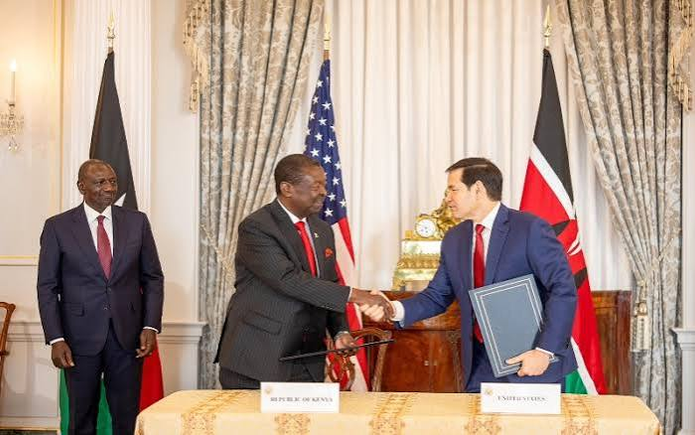
The Court of Appeal has cleared the way for Kenya to proceed with its Sh208 billion health cooperation agreement with the United States, temporarily removing a legal obstacle that had halted its implementation. The ruling comes amid a dispute over constitutional safeguards, patient data protection and parliamentary oversight, with judges citing concerns about the potential consequences for millions of Kenyans who depend on essential healthcare programmes.
Highlights
- The Court of Appeal lifted orders that had blocked implementation of the Kenya-US health cooperation framework.
- The agreement, signed on December 4, 2025, is valued at approximately $1.6 billion (Sh208 billion).
- The government warned that suspending the programme could disrupt treatment for about 1.4 million Kenyans.
- Senator Okiya Omtatah and Katiba Institute raised concerns over data protection, public finance and parliamentary oversight.
- The court allowed implementation to proceed while the legal challenge remains unresolved.
Main Story
Court Removes Legal Barrier to Health Agreement
Kenya’s health cooperation framework with the United States has received a temporary legal reprieve after the Court of Appeal lifted orders that had prevented the government from implementing the agreement.
A three-judge bench comprising Justices Luka Kimaru, Munyao Sila and Dr Johnson Okello set aside conservatory orders issued by the High Court in December 2025.
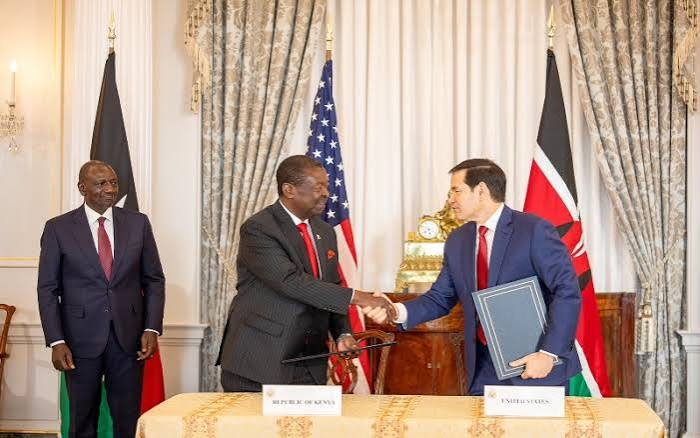
The earlier orders had halted implementation of the framework signed by Kenya and the United States on December 4, 2025, in an agreement witnessed by President William Ruto during his visit to the US.
The appellate court’s decision allows the programme to proceed as the parties pursue the next stage of the legal process. However, the ruling does not settle the underlying dispute over whether the agreement complies with the Constitution.
Government Warns of Disruption to Patient Care
The Attorney General and the Cabinet Secretary for Health challenged the High Court’s decision, arguing that keeping the agreement suspended could have serious consequences for people receiving treatment through supported health programmes.
The government told the court that approximately 1.4 million Kenyans depend on assistance for HIV, tuberculosis (TB), malaria and other infectious diseases.
It also warned that interruptions could affect essential interventions, including immunisation services, and place patients receiving HIV and TB medication at risk of developing drug resistance if their treatment were disrupted.
These concerns featured prominently in the appeal, with the government maintaining that the potential harm to patients justified allowing the framework to operate while the legal questions were being addressed.
The appellate judges gave considerable weight to the possible effects on people whose treatment depends on the programme.
Omtatah and Katiba Institute Challenge the Framework
The agreement has faced opposition from Busia Senator Okiya Omtatah Okoiti and Katiba Institute, who argued against lifting the suspension orders.
Their concerns centred on constitutional and accountability questions, including the handling of personal health data, public finance, the role of county governments and Parliament’s oversight of international agreements.
Omtatah argued that the framework could create financial commitments and regulatory obligations that required parliamentary scrutiny and approval.
He also questioned whether a data protection impact assessment had been undertaken before the agreement was signed and put into operation.
The challenge therefore raises questions extending beyond healthcare funding, including how international cooperation agreements should be reviewed and implemented while safeguarding constitutional rights.
Judges Give Public Interest Significant Weight
In their ruling, the appellate judges found that the government had presented arguable grounds for challenging the High Court’s decision.
They also considered the potential consequences of continued suspension for patients relying on treatment for HIV, TB and malaria.
The bench concluded that, at this stage of the proceedings, the public interest favoured allowing the programme to continue while the appeal was pending.
The judges warned that some of the consequences of interrupting treatment could be irreversible, including serious harm to patients and possible loss of life.
Their reasoning placed the immediate healthcare concerns alongside the constitutional issues raised by the petitioners.
However, allowing the agreement to proceed does not mean that the court has dismissed the objections concerning privacy, public expenditure or parliamentary scrutiny.
Constitutionality of Deal Still to Be Determined
The judges clarified that the High Court had suspended implementation while considering whether the agreement was unconstitutional; it had not issued a final declaration that the framework violated the Constitution.
The Court of Appeal’s latest decision similarly does not amount to a final determination of the agreement’s legality.
The outstanding questions are expected to be addressed through the intended appeal or the substantive proceedings before the High Court.
For now, the government can move forward with implementation while the legal challenge continues.
The eventual outcome could have implications for how Kenya structures international health partnerships, protects sensitive medical information and ensures that major agreements comply with constitutional requirements.
As the legal battle continues, the challenge will be to protect access to essential treatment while ensuring that international health agreements meet Kenya’s constitutional, financial and data protection obligations.

