
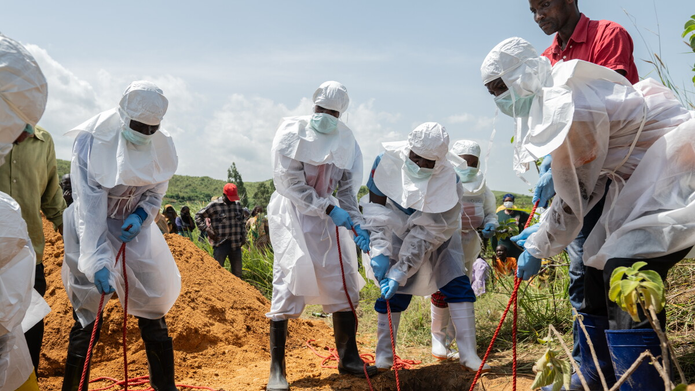
Kenya’s first Ebola patient has been buried at Lang’ata Cemetery in Nairobi under tightly controlled health measures designed to protect mourners, burial teams and the wider public from possible exposure to the virus. Only a small group of relatives attended the Islamic burial, with health officials overseeing every stage of the process.
Highlights
- The burial took place at Lang’ata Cemetery under strict public health protocols.
- Mourners wore masks and maintained a safe distance from the grave.
- Materials that came into contact with the body were destroyed at the site.
- The body was handled only by trained health personnel.
- Officials say Ebola burials should ideally take place within 24 hours.
Main Story
Strict Measures at Lang’ata
Kenya’s first Ebola patient was laid to rest at Lang’ata Cemetery in Nairobi on Wednesday as health authorities implemented extensive precautions to reduce the risk of transmission.
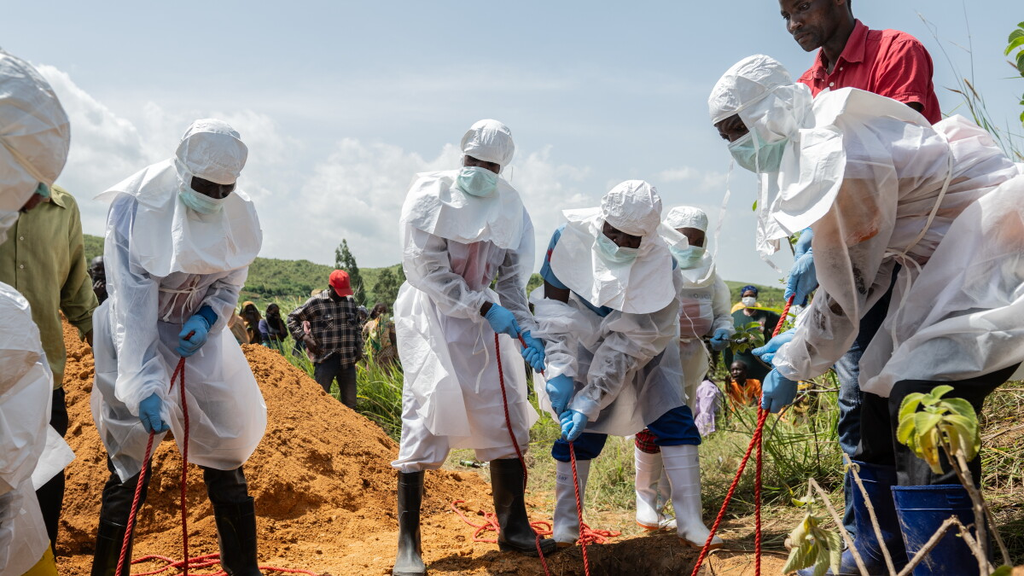
The vehicle carrying the deceased arrived at around 2:30pm, with only a small number of mourners allowed to attend the burial at the Islamic section of the cemetery.
Those present wore masks and remained at a distance from the grave while health officials supervised the proceedings.
Protective Gear and Disinfection
The precautions extended beyond the grave itself.
A fire was maintained beside the burial site, where materials that had come into contact with the deceased were destroyed as part of the infection-control process.
A health worker dressed in a full protective suit was also seen disinfecting a red Toyota Fielder that had transported the patient from Jomo Kenyatta International Airport to Nairobi Hospital.
The worker sprayed the vehicle’s interior with disinfectant before leaving the cemetery.
The scene offered a rare look at the level of protection being applied following Kenya’s confirmation of its first imported case of Bundibugyo virus disease.
How Ebola Victims Are Buried
A Ministry of Health official explained that special precautions begin immediately after an Ebola patient dies.
The body is first cleaned and disinfected by trained health personnel before being placed in several layers of protective material.
Family members are not allowed to touch or view the body.
The deceased is then transported directly to the burial location, with strict controls placed on who can accompany the body.
At the cemetery, a limited number of relatives may witness the burial, but they must maintain a safe distance while the body is lowered into the grave.
Health officials say the burial should take place within 24 hours, while the grave should be at least six feet deep.
Protective equipment and other materials used during the burial are also destroyed at the site to reduce potential contamination.
Family Participation Remains Limited
Health Services Director-General Patrick Amoth said the procedures are part of Kenya’s Safe and Dignified Burial (SDB) approach.
The system was developed during the 2014 Ebola outbreak to reduce transmission while still allowing families to observe selected cultural and religious practices.
Amoth said authorities recognise the importance of religious and cultural traditions, but Ebola requires strict limits on physical contact with the deceased.
“While we are cognisant of cultural and religious practices, a burial is limited to a small number of family members who can witness the burial.”
He added that burials should be conducted as quickly as possible, ideally within 24 hours.
Balancing Tradition and Public Health
Ebola presents a particular challenge for communities where burial traditions involve washing, preparing or physically handling the body.
Such practices are considered unsafe in Ebola deaths because the virus can be transmitted through contact with body fluids.
The issue has been particularly difficult in the Democratic Republic of Congo, where health teams have sometimes faced resistance from communities over burial procedures.
Researchers studying outbreaks involving the Bundibugyo virus have documented incidents where relatives and community members disputed official burial protocols.
According to the research, mistrust and uncertainty over what happens to deceased loved ones can fuel resistance, especially where misinformation about the disease is widespread.
Kenya’s Response
The tightly controlled burial at Lang’ata underscores the wider challenge facing Kenyan health authorities as they work to contain the imported Ebola case.
While officials must protect the public from further transmission, they must also navigate the emotional, cultural and religious needs of affected families.
The Safe and Dignified Burial approach attempts to strike that balance by allowing limited participation without exposing mourners or burial teams to unnecessary risk.
As Kenya continues its Ebola response, clear communication with families and communities will remain an important part of maintaining public trust.
For families facing the loss of a loved one to Ebola, the challenge is not only saying goodbye, but finding a way to do so safely and with dignity.

