
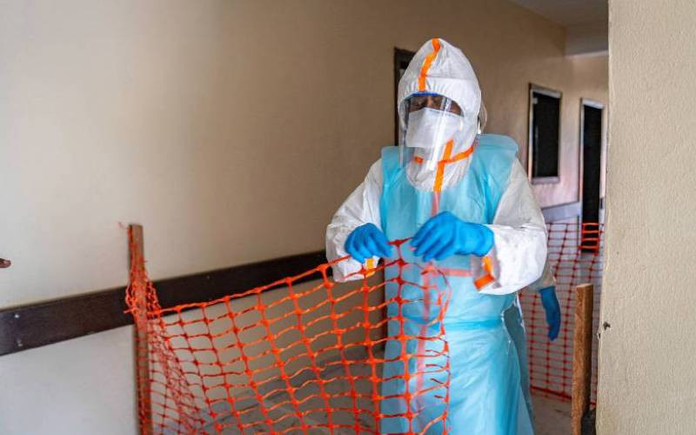
Kenya has widened its Ebola response after the country’s first confirmed case ended in death, with health authorities identifying 28 contacts and working to locate 23 passengers and four crew members who travelled on the same flight as the patient.
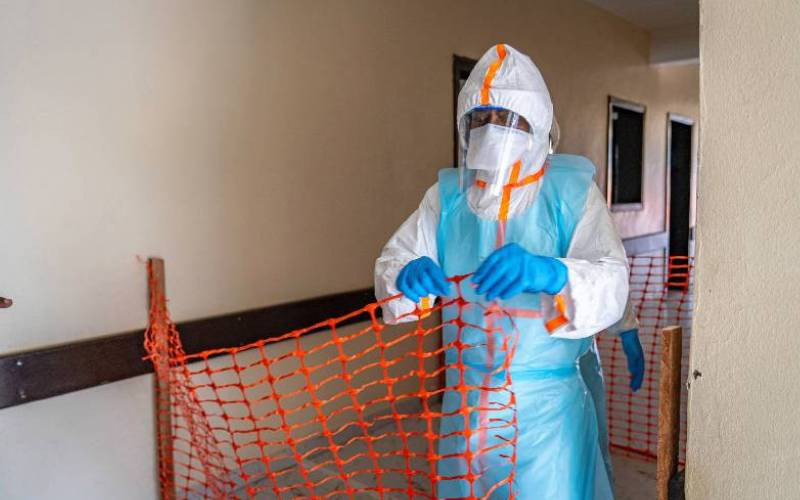
Health Cabinet Secretary Aden Duale said the tracing exercise covers family members, healthcare workers and people who may have been exposed during the patient’s journey from Uganda to Nairobi.
Highlights
- 28 contacts linked to the deceased patient have been identified.
- Health officials are tracing 23 passengers and four crew members.
- The patient was isolated at Nairobi Hospital after developing severe symptoms.
- Tests confirmed Ebola Bundibugyo virus disease.
- The patient died at about 11:30pm on Monday.
Main Story
Contact Tracing Intensifies
The Ministry of Health has stepped up contact tracing following Kenya’s confirmation of its first imported Ebola case.
Duale said 28 people who had contact with the deceased have already been listed. They include members of his family and healthcare workers who attended to him during his illness.
Authorities are also working to locate another group of people who travelled alongside the patient.
Health teams are pursuing 23 passengers and four crew members who were aboard the same flight from Kampala to Nairobi. The exercise is intended to establish whether any of them had close contact with the patient and ensure those considered at risk can be monitored.
Patient Arrived From DRC Through Uganda
The patient was a Kenyan citizen who had been living in the Democratic Republic of Congo before travelling back to the country.
According to the Ministry of Health, he travelled overland from the DRC to Kampala before boarding a flight to Nairobi, arriving in Kenya on October 3.
He underwent routine public-health screening at Jomo Kenyatta International Airport before proceeding through immigration. A relative and a friend then transported him directly to Nairobi Hospital.
Doctors Isolated Him After Symptoms Appeared
At Nairobi Hospital, the patient was initially placed in isolation within the Accident and Emergency department before being transferred to the facility’s East Wing isolation unit.
Duale said the facility had previously been prepared for Covid-19 patients and had the infrastructure required to manage the case.
The patient was experiencing several symptoms, including fever, chills, severe fatigue, weakness, muscle pain, a sore throat, painful swallowing and bleeding beneath the skin at an injection site.
Given his symptoms and recent travel history, doctors suspected a viral haemorrhagic fever and collected samples for laboratory testing.
The samples subsequently tested positive for Ebola Bundibugyo virus disease.
Patient Dies Despite Supportive Care
The patient was placed on supportive treatment but died at approximately 11:30pm on Monday, Duale announced on Tuesday.
The Ministry of Health said preparations were underway for a safe and dignified burial in accordance with public-health protocols for Ebola cases.
The government has meanwhile assured the public that response measures are in place and urged Kenyans not to panic.
Kenya has been maintaining heightened surveillance since the Ebola outbreak in the DRC began. The Ministry says it has screened hundreds of thousands of travellers and tested hundreds of samples as part of its preparedness measures.
Focus Turns to Possible Exposure
The immediate priority for health officials is identifying everyone who may have been exposed and monitoring them for signs of illness.
The flight passengers and crew form an important part of that exercise because they travelled with the patient shortly before his isolation in Nairobi.
Authorities have also prepared quarantine arrangements for people considered to be at risk, according to Duale.
The response comes as the wider Ebola outbreak in the DRC continues to put pressure on regional health systems.
We previously reported on Kenya’s preparations, including the designation of laboratories for Ebola testing and increased surveillance at points of entry.
Kenya Had Been Preparing for an Imported Case
Before the first confirmed case, Kenya had already increased its Ebola preparedness as the outbreak spread in the DRC.
The country designated four laboratories to handle Ebola testing, intensified surveillance at border points and trained health workers to respond to suspected infections.
The latest case is now putting those preparedness measures into practice, with contact tracing, isolation and monitoring taking centre stage.
As Kenya tracks every possible contact, the effectiveness of the response will depend on how quickly health teams can find, monitor and support those who may have been exposed.

