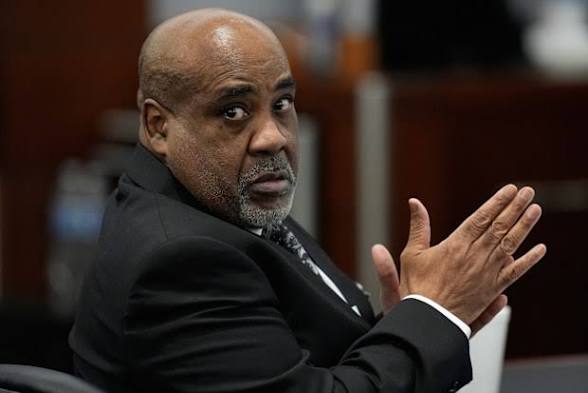
Nearly three decades after Tupac Shakur was killed in a Las Vegas drive-by shooting, the long-running mystery surrounding his death has reached a major turning point. Former gang leader Duane “Keffe D” Davis has been found guilty of orchestrating the murder, becoming the first person convicted in the case that has generated endless speculation across the hip-hop world.
Highlights
- Duane “Keffe D” Davis has been convicted in Tupac Shakur’s murder.
- Tupac was killed in Las Vegas on September 7, 1996, aged 25.
- Prosecutors said Davis organised the shooting and provided the weapon.
- Davis’ own statements became a major part of the prosecution’s case.
- He has said he intends to appeal the conviction.
Main Story
Tupac Murder Case Finally Produces a Conviction
The nearly 30-year-old investigation into the killing of Tupac Shakur has finally resulted in a conviction.
A Las Vegas jury found Duane “Keffe D” Davis guilty of murder with a deadly weapon over the death of the legendary rapper.
Davis, 63, showed little emotion as the verdict was delivered in court. He later told the judge that he intended to challenge the decision.
Tupac was only 25 when he was fatally shot in Las Vegas on September 7, 1996, at a time when his career was reaching extraordinary heights.
The rapper went on to become one of hip-hop’s most influential figures, with more than 75 million records sold globally.
Prosecutors’ Case Against Davis
Prosecutors did not accuse Davis of personally pulling the trigger.
Instead, they argued that he was the person who organised the attack and supplied the firearm used during the shooting.
According to the prosecution, the killing was motivated by a confrontation that had taken place earlier that night involving Tupac, his associates and Orlando Anderson, Davis’ nephew.
They argued that Davis wanted retaliation following the altercation and helped arrange the shooting from a white Cadillac.
Anderson was identified by prosecutors as the person who fired the shots, although he was never convicted in connection with Tupac’s death.
Davis’ Own Words Became Key Evidence
One of the strongest elements of the prosecution’s case was Davis’ history of speaking publicly about the shooting.
Authorities had previously interviewed him in connection with the investigation into the death of fellow rapper Christopher Wallace, better known as The Notorious B.I.G.
During a 2008 police interview, Davis discussed his connection to the events surrounding Tupac’s killing.
He later provided further details in his 2019 memoir, Compton Street Legend, as well as through documentaries, podcasts and media appearances.
Prosecutors argued that his repeated accounts amounted to admissions of responsibility.
They told jurors that Davis had consistently portrayed himself as the person in charge during the events leading to the shooting.
Defence Says Davis Was Telling Stories
Davis’ lawyers took a very different position.
They argued that his public claims about Tupac were exaggerated stories designed to boost his profile and help sell his memoir and other media projects.
His defence team urged jurors not to treat his statements as reliable evidence, portraying him as someone who had built a reputation around dramatic stories about his past.
The prosecution, however, asked jurors to consider Davis’ own repeated descriptions of his involvement.
The jury reached its guilty verdict only hours after receiving the case for deliberation.
Emotional Scenes in Court
The decision triggered an emotional reaction from Tupac’s relatives.
Family members held hands, hugged and cried after the verdict was announced. His sister was also seen embracing one of the prosecutors.
Outside the courthouse, Tupac fans reacted with a mixture of tears and celebration as news of the conviction spread.
For supporters who have followed the case for decades, the verdict represents a major development in one of hip-hop’s most enduring mysteries.
A Case That Shaped Hip-Hop History
Tupac’s murder occurred during one of the most turbulent periods in American hip-hop.
The rivalry between East Coast and West Coast rap had become increasingly intense, while tensions involving the Bloods and Crips also influenced the culture surrounding the music industry.
Tupac’s death, followed by the killing of The Notorious B.I.G. months later, fuelled years of theories about gang rivalries, music-industry conflicts and possible conspiracies.
Despite the attention surrounding both cases, Tupac’s killing remained unresolved for decades.
The conviction of Davis now marks the first major criminal judgment directly tied to the murder.
Davis Plans to Appeal
After the verdict, Davis told Clark County District Court Judge Carli Kierny that he wanted to appeal.
The judge explained that the appeal process could begin after sentencing.
Davis is scheduled to return to court for sentencing on October 13.
For Tupac’s family and millions of fans worldwide, the conviction closes one chapter of a case that has remained part of hip-hop folklore for almost 30 years.
For almost 30 years, Tupac’s murder remained one of hip-hop’s biggest unanswered questions; now, a jury has delivered the first conviction but the story may not be over yet.

