
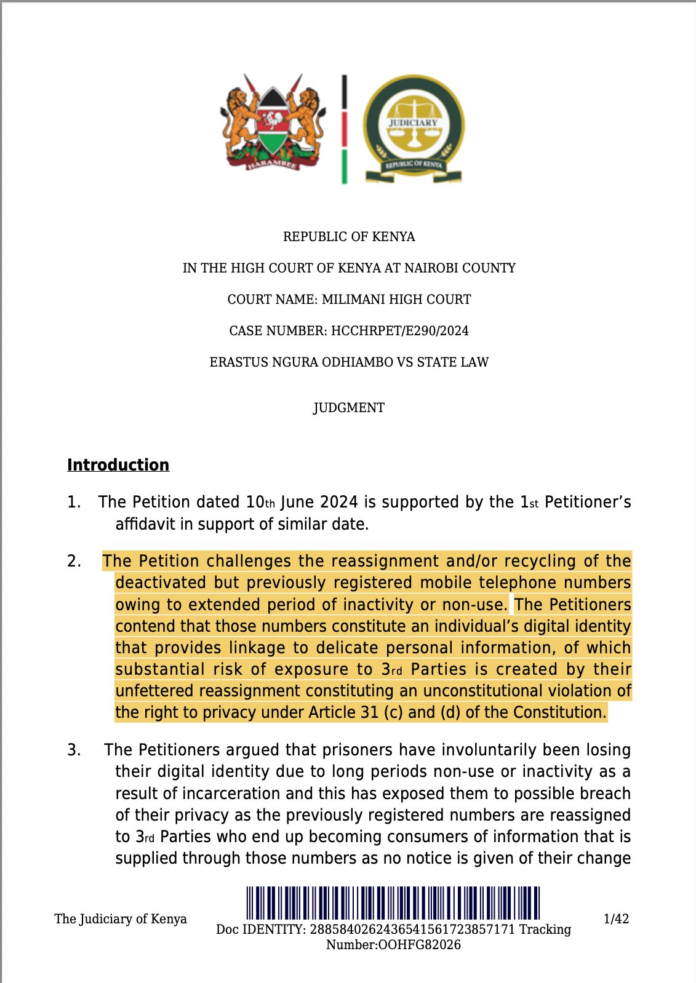
Your mobile number is no longer just a line for calls and texts it’s officially part of your digital identity. In a landmark ruling, Kenya’s High Court has recognized that phone numbers are deeply tied to personal data, setting new limits on how telecom companies handle deactivated SIM cards.
Highlights
- High Court declares phone numbers as protected personal data under the Constitution
- SIM card recycling now faces stricter legal conditions
- Consent or thorough verification required before reassigning numbers
- Government given 6 months to implement safeguards
- Focus placed on preventing data exposure to new users
Main Story
Phone Numbers Now Recognized as Private Data
In a major privacy ruling, the High Court has affirmed that a registered mobile phone number forms part of an individual’s private life. This means it falls under constitutional protections that guard against unnecessary collection or sharing of personal information.
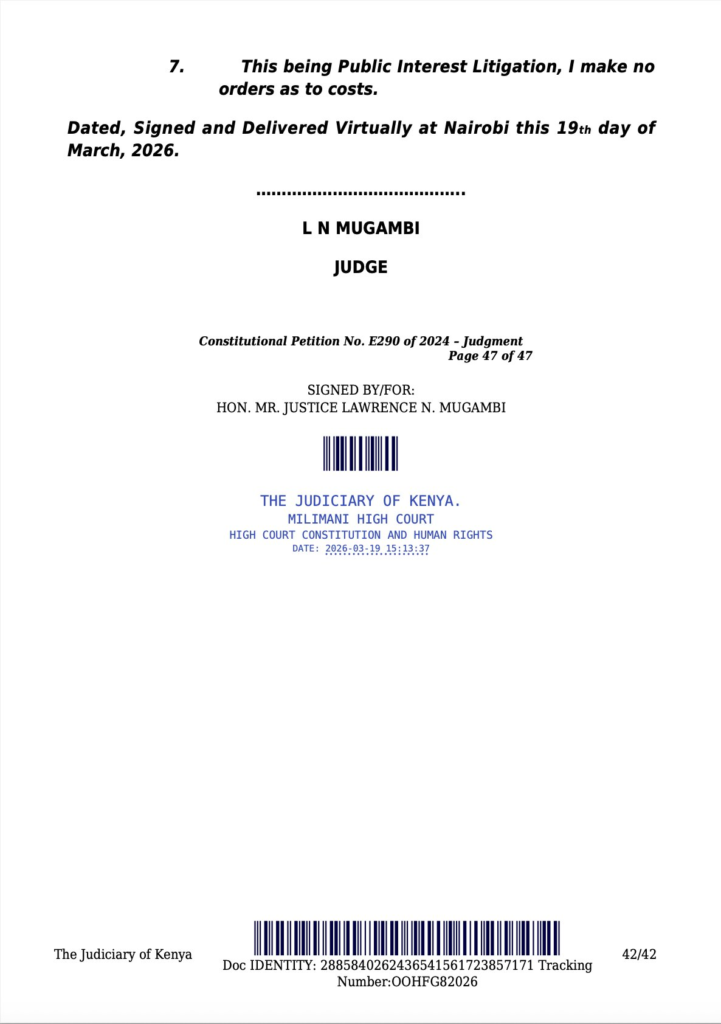
The decision reinforces Article 31 of the Constitution, which protects citizens from unwarranted intrusion into their private affairs.
Why the Case Was Filed
The ruling follows a legal challenge against the common industry practice of reassigning inactive phone numbers. Petitioners raised concerns that telecom companies often recycle numbers without considering the risks tied to personal data still linked to those lines.
These concerns are especially relevant in today’s digital world, where phone numbers are used to access banking apps, emails, social media, and verification systems.
New Rules for SIM Card Recycling
The court has now outlined strict conditions that must be met before any number is reassigned:
- The original owner must give clear and verifiable consent
- If consent isn’t available, there must be a reasonable waiting period after public notice
- Authorities must prove efforts were made to trace the original owner
- Strong technical measures must be in place to prevent data leaks
Additionally, the Office of the Attorney General has been given six months to put systems in place to enforce these protections.
How Number Reassignment Affects People
This ruling directly addresses real risks many Kenyans face:
- Privacy breaches: A recycled number could still be linked to someone’s bank accounts, emails, or social media
- Unauthorized access: New users might receive sensitive messages, OTP codes, or confidential alerts
- Identity risks: Personal data tied to the previous owner could be exposed or misused
- Financial danger: Mobile money services like M-Pesa could become vulnerable if accounts aren’t properly disconnected
For many, this has led to awkward — and sometimes dangerous situations where strangers gain access to private information simply by inheriting a number.
A Step Toward Digital Safety
The ruling signals a shift toward stronger digital rights in Kenya. As more services rely on mobile numbers as primary identifiers, protecting them becomes essential in safeguarding citizens’ online and financial security.
As Kenya steps deeper into the digital age, one question stands out is your phone number still just a contact, or your entire identity?

