
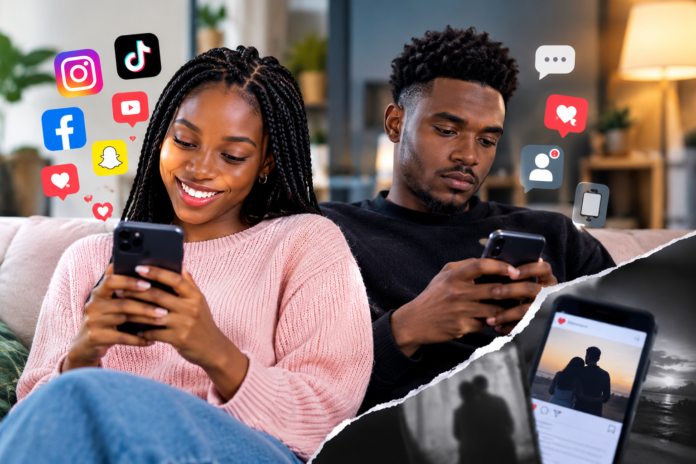
Relationships today do not just happen between two people. Sometimes, there is a third presence in the room social media. From meeting someone through Instagram or TikTok to checking when your partner was last online, digital platforms have changed how people fall in love, communicate, argue and even break up.
For young Kenyans navigating dating in an always-connected world, social media can bring couples closer while also creating new reasons for jealousy, comparison and misunderstanding.
Highlights
- Social media has changed how people meet and communicate with potential partners.
- Online comparisons can create unrealistic expectations about relationships.
- Ghosting and other digital dating behaviours are becoming increasingly common.
- Public relationship posts can create pressure for couples to perform their love online.
- Healthy digital boundaries are becoming an important part of modern relationships.
Main Story
Love Now Starts Online
The days when meeting a romantic partner depended entirely on being introduced by friends or crossing paths in everyday life are long gone.
Instagram, TikTok, Facebook and dating platforms have created new spaces where people can meet, flirt and build connections.
A simple reaction to someone’s story can become a conversation, while regular comments and direct messages can gradually turn into something more serious.
For many young people, social media has made dating more accessible. You can discover someone’s interests, personality and lifestyle before even meeting them in person.
But that convenience comes with its own complications.
When Your Relationship Becomes Content
For some couples, social media is now part of the relationship itself.
There are anniversary posts, couple photos, birthday tributes, matching outfits and relationship announcements. Some couples even “soft launch” their partners by posting a hand, silhouette or photograph where their face is deliberately hidden.
Sharing moments online can be fun, but it can also create pressure.
When people see other couples constantly posting romantic holidays, expensive dates and elaborate surprises, they may start measuring their own relationships against what appears on their screens.
The problem is that social media usually shows the highlight reel, not the arguments, financial struggles or difficult conversations happening behind closed doors.
The Comparison Trap
One of the biggest ways social media affects relationships is through comparison.
A person may look at another couple online and wonder why their partner does not buy them flowers, plan elaborate dates or publicly celebrate them in the same way.
This can create expectations that have little connection to the reality of the relationship.
Sometimes, the problem is not that a partner is doing something wrong. It is simply that social media has provided an endless stream of seemingly perfect alternatives.
The Rise of Ghosting and Digital Breakups
Technology has also changed how relationships end.
Instead of having an uncomfortable conversation face-to-face, some people disappear completely.
Ghosting, leaving messages unanswered, unfollowing a partner or quietly removing relationship photos have become familiar parts of modern dating culture.
For the person being left behind, the lack of explanation can be particularly frustrating.
Other relationships exist in an uncertain middle ground, commonly described as situationships. These connections may involve regular dates, intimacy and emotional attachment without a clear agreement about what the relationship actually is. (SPMBuzz)
Digital communication can make this uncertainty even worse because a person can remain constantly present through likes, reactions and messages without actually committing.
When Being Online Creates Jealousy
Social media can also introduce questions that previous generations never had to deal with.
Who is liking your partner’s pictures?
Why did they follow their ex again?
Who keeps replying to their stories?
Why are they online but ignoring your message?
For some couples, these small digital interactions can become major sources of conflict.
The ability to constantly monitor someone’s online activity can create suspicion even when there is no evidence of wrongdoing.
Healthy relationships require trust, but social media can make it tempting to investigate instead of communicate.
Privacy Is Becoming a Relationship Issue
Another major change is the question of how much of a relationship should be public.
Some people want their partner to post them regularly as a sign of commitment. Others prefer keeping their relationships completely private.
Neither approach is automatically wrong.
Problems arise when couples have different expectations about what should be shared online.
A disagreement over posting a birthday message might actually be about something deeper — one person may feel unappreciated while the other may simply value privacy.
The solution is not necessarily more posts. It is having an honest conversation about what both partners are comfortable sharing.
Social Media Can Also Bring Couples Closer
It would be unfair to blame social media for every problem in modern relationships.
For couples living in different cities or countries, messaging, video calls and social platforms can make distance easier to manage.
Partners can share funny videos, send supportive messages during a difficult day or stay involved in each other’s lives even when they cannot physically be together.
Social media can also help couples discover shared interests and create memories that would otherwise be difficult to maintain across distance.
The issue is less about whether couples use social media and more about how they use it.
Finding Balance in the Digital Age
A healthy relationship does not require abandoning social media.
Instead, couples may need clearer boundaries around digital behaviour.
That could mean agreeing on what stays private, avoiding unnecessary arguments over online interactions, putting phones away during important conversations and resisting the temptation to compare a real relationship with carefully edited content online.
Most importantly, couples need to remember that digital attention is not the same thing as emotional intimacy.
A partner can post you every day and still fail to communicate with you when it matters.
Another person may never post you but consistently show up, listen, support you and respect your boundaries.
The strongest relationships are ultimately built offline through communication, trust, accountability and shared experiences.
The Bigger Picture
Social media has not changed the basic human desire for love and companionship. It has simply changed the environment in which relationships develop.
Young people now have more ways to meet, communicate and express affection than previous generations did. At the same time, they face new pressures created by constant visibility, endless comparison and digital access to potential alternatives.
As dating continues to evolve, perhaps the biggest challenge is learning when to put the phone down and focus on the person sitting beside you.
In a world where love can begin with a follow and end with an unfollow, perhaps the real question is not how much of your relationship appears online, but how strong it remains when nobody is watching.

